Independent guide to Florida universities for Brazilian and international students — real costs, verified merit scholarships, admission step by step
English · Português

Fort Myers, Florida · Public university

Florida Gulf Coast University (FGCU) for Brazilian students

Tuition, acceptance rate, scholarships with conservative numbers and the admission process step by step — in dollars and Brazilian reais — updated 2026-09-15. Este guia em português →

Tuition/year
$28,019
Total cost/year
$44,141
In reais (R$)
R$ 227,768
Talk to an advisor

Reply within one business day. No obligation.

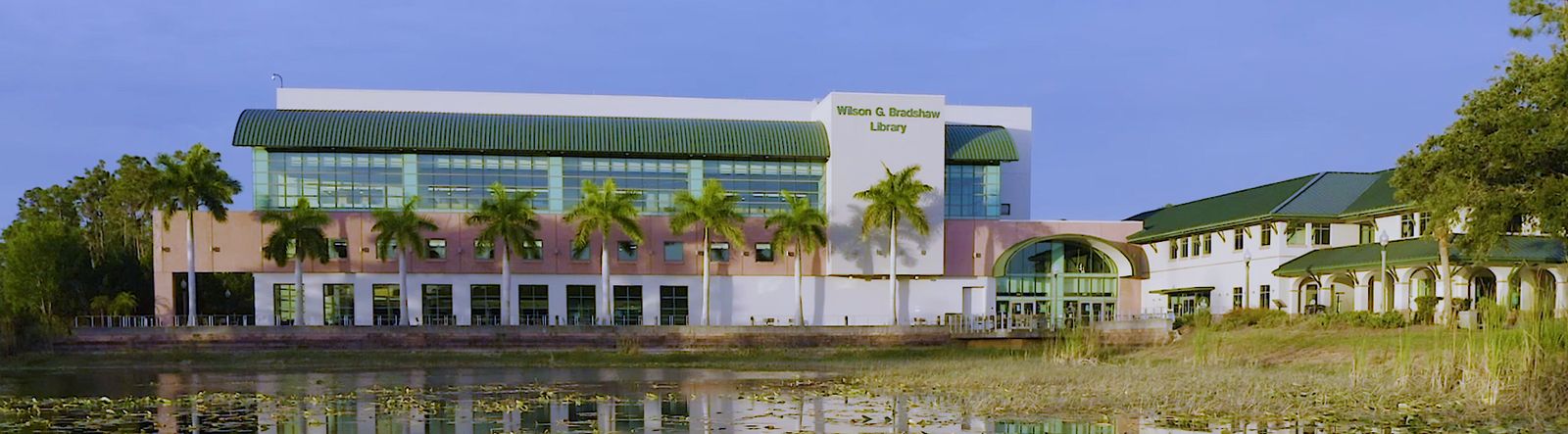
The green-roofed Wilson G. Bradshaw Library with palm trees, seen across the campus lake at Florida Gulf Coast University in Fort Myers on a blue-sky day
Photo: Florida Gulf Coast University

Profile

Florida Gulf Coast University by the numbers

The figures below come from the US Department of Education's public databases and from Florida Gulf Coast University's own Common Data Set. They let you gauge the size of the institution, the real level of competition and the odds of finishing on time.

Acceptance rate
63%
Undergraduate students
14,463
Total students
16,612
International students
2.4%
Student-faculty ratio
20:1
Graduation rate (6 years)
57%
Founded
1991
Campus setting
Suburban, large metro area

Admission

Florida Gulf Coast University acceptance rate: how hard it is to get in

Florida Gulf Coast University admits 63% of applicants, according to College Navigator, the US Department of Education's public database.

The middle half of admitted students scored between 1050 and 1200 on the SAT and between 20 and 25 on the ACT. The average high-school GPA of admitted students is 4.12; the published minimum for international applicants is 2.8.

In practice, for a Brazilian applicant: a converted transcript near the average GPA and an SAT inside the range put you in the typical admitted group. Below that, admission is still possible, but merit aid gets harder.

Costs

Florida Gulf Coast University tuition and total cost per year

Tuition at Florida Gulf Coast University for international students is $28,019 a year. With housing, meals and health insurance the estimated total is $44,141 — about R$ 227,768 at R$ 5.16 to the dollar (2026-08-15), verified on 2026-09-15.

ItemAnnual estimate (USD)Approx. in R$
Tuition (out of state)$28,019R$ 144,578
Housing and meals$12,320R$ 63,571
Health insurance$3,802R$ 19,618
Estimated total$44,141R$ 227,768

Estimates for 2026–2027, verified on 2026-09-15. Converted at R$ 5.16 to the dollar (2026-08-15). Books, transport and course fees vary.

Annual cost breakdown: Tuition $28,019, Housing and meals $12,320, Health insurance $3,80263.5%27.9%
Tuition · $28,019Housing and meals · $12,320Health insurance · $3,802

Scholarships

Scholarships at Florida Gulf Coast University: conservative numbers

ScholarshipAmount per yearCriteriaRenewableDeadline
Out-of-State Waiver (undergraduate admissions)$10,500Students classified as non-Florida residents; 3.4 transfer GPA; priority to newly admitted transfers; covers the out-of-state/in-state tuition difference on 9 credits per semester (fall and spring), up to 2 years.YesApril 1 (fall) / October 1 (spring)

Merit scholarships: students have received between 0% and 25% of tuition (conservative estimate, 2026–2027; verified on 2026-09-15). Typical conditions: Moderate merit aid; FGCU Foundation funds only (the Blue & Green awards require U.S. citizenship or eligible non-citizen status). The real amount depends on your profile — we never promise percentages.

Our rule is simple: we would rather you plan with conservative numbers and be surprised for the better — never the other way round. Studying in the United States is not free for anyone.

International aid

Scholarships for international students at Florida Gulf Coast University

Only awards the university itself describes are listed, with the requirements it publishes. Where the official page does not say whether international students may apply, the table says "not stated" — ask before counting on the money.

FGCU Foundation Scholarships

Amount per year: Varies by fund; individual amounts not published (the Foundation awarded 'over $6 million' last year)

Requirements: Admitted or applied freshman with a UIN (ID number issued after applying); one general application covers all funds; donor-set criteria (merit, leadership, need); need-based funds require a FAFSA, which international students cannot file

International: Yes

Renewal: Must reapply every year; award can be cancelled if criteria (GPA, full-time status, major) are no longer met

Deadline: Priority March 1; final deadline May 1 (2026-2027: 'Final Deadline Extended'). The international FAQ still says 'open annually between October 1st and March 1st' with January 1 priority — outdated dates

How to apply: Online form at scholarship.fgcu.edu (Foundation Scholarship Application), after receiving the UIN; no need to wait for admission

Out-of-State Tuition Waiver (Undergraduate Admissions)

Amount per year: Covers the out-of-state/in-state tuition difference, 9 credits per semester, Fall and Spring; page lists $10,500/year up to 2 years in the transfer table

Requirements: Classified as non-Florida resident; priority to newly admitted transfer students with a 3.4 transfer GPA; committee reviews GPA, leadership, civic engagement, talents; three 250-word essays; funding-dependent, 'may not be awarded every term'

International: Not stated

Renewal: Automatic each semester until the first bachelor's: 3.0 cumulative GPA, no semester below 2.75, credit earned in 80% of attempted hours, 12 credits per semester

Deadline: Fall: opens January 6, closes April 1; Spring: opens September 1, closes October 1

How to apply: Separate form (applynow.fgcu.edu/portal/scholarshiptransfer) with UIN and three essays

Need-based aid

No. F-1 students have no access to federal or state aid, and the FGCU Foundation's need-based funds require the FAFSA. The only institutional route is the Foundation's merit funds. FGCU requires proof of funds for the full year before issuing the I-20.

Scores

What Florida Gulf Coast University asks of Brazilian applicants

RequirementReference
SAT (25th–75th percentile)1050 – 1200
ACT (25th–75th percentile)20 – 25
Average GPA of admitted students4.12
Minimum GPA2.8
Minimum TOEFL79
Minimum IELTS6.5
Minimum Duolingo110
SAT/ACT policySAT or ACT required
SAT range of admitted students: 1050 at the 25th percentile and 1200 at the 75th10501200average 1120
Half of admitted students fall inside the highlighted range. Landing below it does not rule you out, but it weighs on merit aid.

How your Brazilian transcript is read

The ENEM plays no part in the review. The university converts your secondary-school grades onto the American 0 to 4 scale, and that number is what appears as your GPA. Averages between 7 and 8 usually land near 3.0; above 9, near 4.0. The conversion is done either by the university itself or by a credential evaluation service, and the transcript has to be translated by a sworn translator.

Tests

Admission tests at Florida Gulf Coast University

Admitted-student profile according to U.S. News & World Report

U.S. News publishes the range covering the middle half of admitted students, not an average. Use the range as a gauge of competitiveness (2026 data).

ItemReference
SAT (25th–75th percentile)1040 – 1200
ACT (25th–75th percentile)20 – 25
Acceptance rate

Source: U.S. News & World Report

Accepted English tests and minimum scores

TestMinimum scoreNote
TOEFL iBT79'Internet based test: Minimum 79' (also lists CBT 213 and paper 550, discontinued formats). Legacy 0-120 scale; the new 1-6 TOEFL scale is not mentioned anywhere. Validity: the international admissions page says 'not more than 2 years old' while the FAQ and Application Process say 'within three years' — internal contradiction. Some programs may require a higher-than-minimum score (Regulation 2.001 §M.2.d.1.b).
IELTS Academic6.5'International English Language Testing System (IELTS) Minimum score: 6.5'. No band minimums stated. Regulation 2.001 lists IELTS as alternative evidence to the TOEFL ('with the approval of the Assistant Vice President for University Admissions and the appropriate Dean').
Duolingo English Test110'Duolingo English Test Minimum score: 110' (international admissions page; Regulation 2.001 §M.2.d.2.e; 2026-2027 Catalog 'English Proficiency'). The older international FAQ cites only TOEFL/IELTS. FGCU's IELP requires Duolingo 80 as a prerequisite for its advanced course (not conditional admission to the bachelor's).
TOEFL Essentialsnot listedNot listed. Pages checked: International Student Admissions ('Admission Criteria'), International FAQ, Application Process (Step 4), 2026-2027 Catalog ('English Proficiency') and Regulation 2.001 §M.2.d — only TOEFL, IELTS and Duolingo appear.
PTE Academicnot listedNot listed. Pages checked: International Student Admissions ('Admission Criteria'), International FAQ, Application Process (Step 4), 2026-2027 Catalog ('English Proficiency') and Regulation 2.001 §M.2.d — only TOEFL, IELTS and Duolingo appear.
Cambridge English (B2 First / C1 Advanced / C2 Proficiency)not listedNot listed. Pages checked: International Student Admissions ('Admission Criteria'), International FAQ, Application Process (Step 4), 2026-2027 Catalog ('English Proficiency') and Regulation 2.001 §M.2.d — only TOEFL, IELTS and Duolingo appear.
iTEPnot listedNot listed. Pages checked: International Student Admissions ('Admission Criteria'), International FAQ, Application Process (Step 4), 2026-2027 Catalog ('English Proficiency') and Regulation 2.001 §M.2.d — only TOEFL, IELTS and Duolingo appear.
ELSnot listedNot listed. Pages checked: International Student Admissions ('Admission Criteria'), International FAQ, Application Process (Step 4), 2026-2027 Catalog ('English Proficiency') and Regulation 2.001 §M.2.d — only TOEFL, IELTS and Duolingo appear.
SAT/ACT (English-test waiver)not listedNo FGCU page accepts an SAT (Reading & Writing) or ACT (English/Reading) score as proof of English proficiency. SAT/ACT/CLT are required of every freshman, but as the admission test, not as a waiver of TOEFL/IELTS/Duolingo.
English-medium high school (waiver)4 years at a U.S. high school, or a country on the English-speaking listPublished exemptions: 'Attended a US high school for 4 years and graduated or earned a degree from a US college or university'; the FAQ adds an AA from a Florida public college, a U.S. bachelor's, a C in English Composition 1 and 2, and citizenship of a country on the 'English Speaking Countries' list (Brazil is not on it). Regulation 2.001 §M.2.d.2.g also allows 'An English Language proficiency assessment by a certified ESL faculty'. A bilingual/international school in Brazil is NOT mentioned as an exemption — a Brazilian needs the test.

Cambridge English (B2 First, C1 Advanced, C2 Proficiency) appears in the table when the university accepts it. If it is absent, the official page does not list it — do not send a Cambridge certificate in place of the TOEFL without confirming with admissions.

SAT and ACT

SAT, ACT or CLT is required for every first-year applicant, international included. If the credential evaluation carries no GPA, ACT 21 or SAT 1060 is required. Tests also count for merit awards. Superscoring: not stated. TOEFL, IELTS or Duolingo is waived only after four years of U.S. high school, a U.S. college degree or citizenship of a listed English-speaking country (Brazil is not listed).

Is your score below 79 on the TOEFL or 110 on the Duolingo test? That does not end the plan — our live prep courses with a teacher exist to close exactly that gap.

Majors

All majors at Florida Gulf Coast University

There are 65 majors, grouped by the school that offers them, each with the degree code the application form uses. Search by name, or filter by school or STEM.

The 23 majors marked STEM qualify for an extra 24 months of work authorisation on top of OPT — up to 36 months working in the United States after graduation. If you plan to stay, that designation matters more than the name of the degree.

65 majors

Bower School of Music & the Arts (College of Arts & Sciences)6

Art
B.A.
Music Education
B.M.E.
Music Therapy
B.M.T.
Music
B.A.
Music Performance
B.M.
Theatre
B.A.

College of Arts & Sciences23

Anthropology
B.A.
Biology
B.A.STEM
Biology
B.S.STEM
Biochemistry
B.S.STEM
Biotechnology
B.S.STEM
Political Science
B.A.
Forensic Science
B.S.STEM
Communication
B.A.
Forensic Studies
B.S.
Integrated Studies
B.A.
Legal Studies
B.S.
Philosophy
B.A.
Physics
B.S.STEM
History
B.A.
Journalism
B.A.STEM
Criminal Justice
B.S.
English
B.A.
Mathematics
B.A.STEM
Mathematics
B.S.STEM
Psychology
B.A.
Chemistry
B.A.STEM
Chemistry
B.S.STEM
Sociology
B.A.

College of Education7

Special Education
B.A.
Early Childhood Education
B.A.
Child and Youth Studies
B.S.
Secondary Biology Education
B.A.
Secondary Social Science Education
B.A.
Secondary Mathematics Education
B.A.
Elementary Education
B.A.

Daveler & Kauanui School of Entrepreneurship2

Digital Media Design
B.A.
Entrepreneurship
B.S.

Lutgert College of Business8

Management
B.S.
Analytics and Informatics
B.S.STEM
Accounting
B.S.
Quantitative Economics
B.S.STEM
Finance
B.S.
Supply Chain Management
B.S.
Marketing
B.S.
Computer Information Systems
B.S.

Marieb College of Health & Human Services6

Health Administration
B.S.
Health Science
B.S.
Clinical Laboratory Science
B.S.STEM
Exercise Science
B.S.
Public Health
B.S.P.H.
Social Work
B.S.W.

School of Nursing (Marieb College of Health & Human Services)1

Nursing
B.S.N.

School of Resort & Hospitality Management (Lutgert College of Business)3

Resort and Hospitality Administration
B.S.
PGA Golf Management
B.S.
Hospitality & Tourism Mgmt
B.S.

The Water School3

Marine Science
B.S.STEM
Environmental Studies
B.A.STEM
Environmental Geology
B.S.STEM

U.A. Whitaker College of Engineering6

Bioengineering
B.S.STEM
Computer Science
B.S.STEM
Environmental Engineering
B.S.Env.E.STEM
Civil Engineering
B.S.C.E.STEM
Software Engineering
B.S.STEM
Construction Management
B.S.C.M.STEM

Graduate

Graduate study at Florida Gulf Coast University

Close to 3.2% of Florida Gulf Coast University's graduate students come from outside the United States. It is a far more international room than the undergraduate one, and that changes the experience: almost everyone beside you also arrived recently.

There are 21 programs open to international students, 6 of them STEM-designated.

21 programs

ProgramSTEMGRE or GMAT requiredIntake
College of Arts & Sciences5
Applied Mathematics (M.S.)STEMYesFSpSu
Biology (M.S.)NoFSpSu
English (M.A.)NoFSpSu
Forensic Studies (M.S.)YesFSpSu
History (M.A.)NoFSpSu
College of Education3
Curriculum & Instruction (M.Ed.)NoFSpSu
Educational Leadership (M.A.)NoFSpSu
Educational Leadership (M.Ed.)NoFSpSu
Daveler & Kauanui School of Entrepreneurship1
Entrepreneurship (M.S.)NoFSpSu
Lutgert College of Business3
Business Administration (M.B.A.)—FSpSu
Business Analytics (M.B.A.)STEM—FSpSu
Data Analytics and AI (M.S.)STEM—FSpSu
Marieb College of Health & Human Services5
Clinical Mental Health Counseling (M.A.)YesFSpSu
Nurse Educator (M.S.N.)NoFSpSu
Nursing Leadership and Management (M.S.N.)NoFSpSu
Occupational Therapy (M.S.)NoFSpSu
Physician Assistant Studies (M.P.A.S.)YesFSpSu
The Water School2
Environmental Science (M.S.)STEMYesFSpSu
Environmental Studies (M.A.)STEMYesFSpSu
U.A. Whitaker College of Engineering2
Civil Engineering (M.S.)STEM—FSpSu
Computer Science (M.S.)—FSpSu
FSpSuF = fall (August) · Sp = spring (January) · Su = summer (May)No = GRE/GMAT waived · Yes = required · — = confirm with the program

The STEM designation matters more at master's level than at undergraduate. It allows a request for 24 extra months of OPT on top of the initial 12, which means up to three years working in the United States off a one- or two-year degree.

What the graduate programs require

RequirementReference
Minimum TOEFL79
Minimum IELTS6.5
Minimum Duolingo110
Application fee$30
Minimum full-time load9 credit hours per semester

GRE and GMAT

10 of the programs above waive the GRE and GMAT. The rest require the test, and a waiver is only considered for applicants holding a business degree from an AACSB-accredited institution. Work experience does not count towards a waiver.

Graduate documents

Beyond a transcript from every institution you attended, with certified translation, the application asks for a personal statement in English, a professional resume and two reference forms from people who can speak to your academic and professional background. A course-by-course credential evaluation is strongly recommended.

Graduate deadlines

IntakeApplication complete by
Fall intakeJuly 1, 2027
Spring intakeNovember 1, 2026

Deadlines

When to do what

IntakeApplication deadlineScholarship deadline
Fall intakeJuly 1, 2027January 1, 2027 (priority)
Spring intakeNovember 1, 2026

A 12-month timeline

  1. 12 to 10 months out — choose the universities and check whether your English score already clears the minimum. If it does not, this is where prep comes in.
  2. 10 to 8 months out — translate the transcript and request the credential evaluation where required. It takes 2 to 6 weeks and is the single biggest source of delay.
  3. 8 to 6 months out — submit the application and pay the $30 fee.
  4. 6 to 4 months out — acceptance letter and proof of funds. The university only issues the I-20 after approving the bank statement.
  5. 4 to 3 months out — pay the SEVIS fee, complete the DS-160 and book the consular interview. Confirm the fee amounts on the official site: they change.
  6. 3 to 1 month out — consular interview, visa in the passport, flights, insurance and housing.

Documents

What you need to gather

The order below is the order in which Florida Gulf Coast University asks for each item. Start with the first two: they depend on third parties and they are what stalls the process.

  1. Complete secondary-school transcript, translated into English by a sworn translator.
  2. Credential evaluation by a recognised service (WES, SpanTran, ECE). It takes 2 to 6 weeks — start here.
  3. English score — TOEFL from 79, or Duolingo from 110.
  4. SAT or ACT score, where required and whenever you want to compete for merit aid.
  5. Letter of recommendation from a teacher or coordinator.
  6. Personal statement in English.
  7. Proof of funds — a bank statement showing funds for the first year. It is the document that releases the I-20, and the one most often sent back for correction.
  8. Valid passport and the $30 application fee.

Campus

Campus life and housing

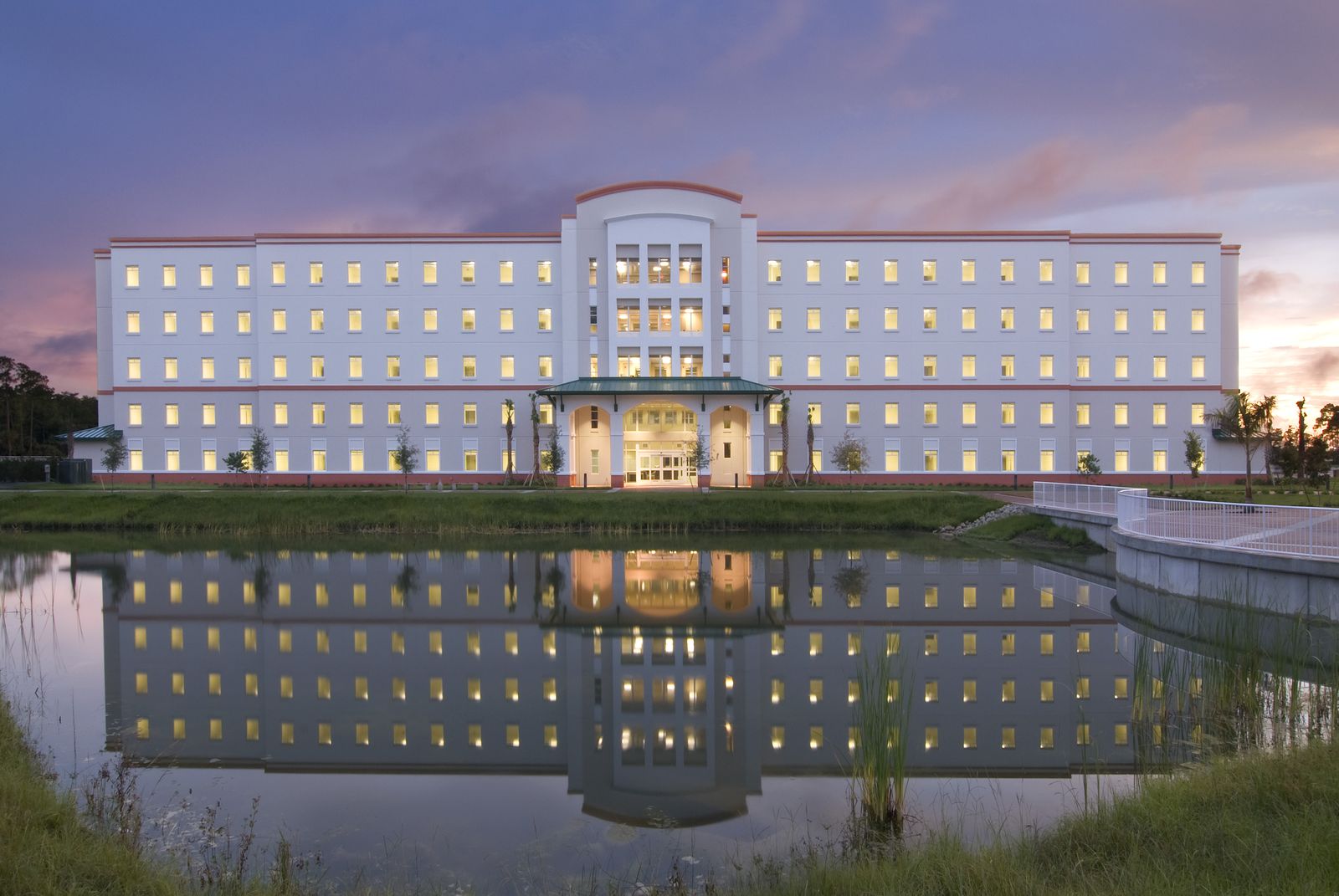
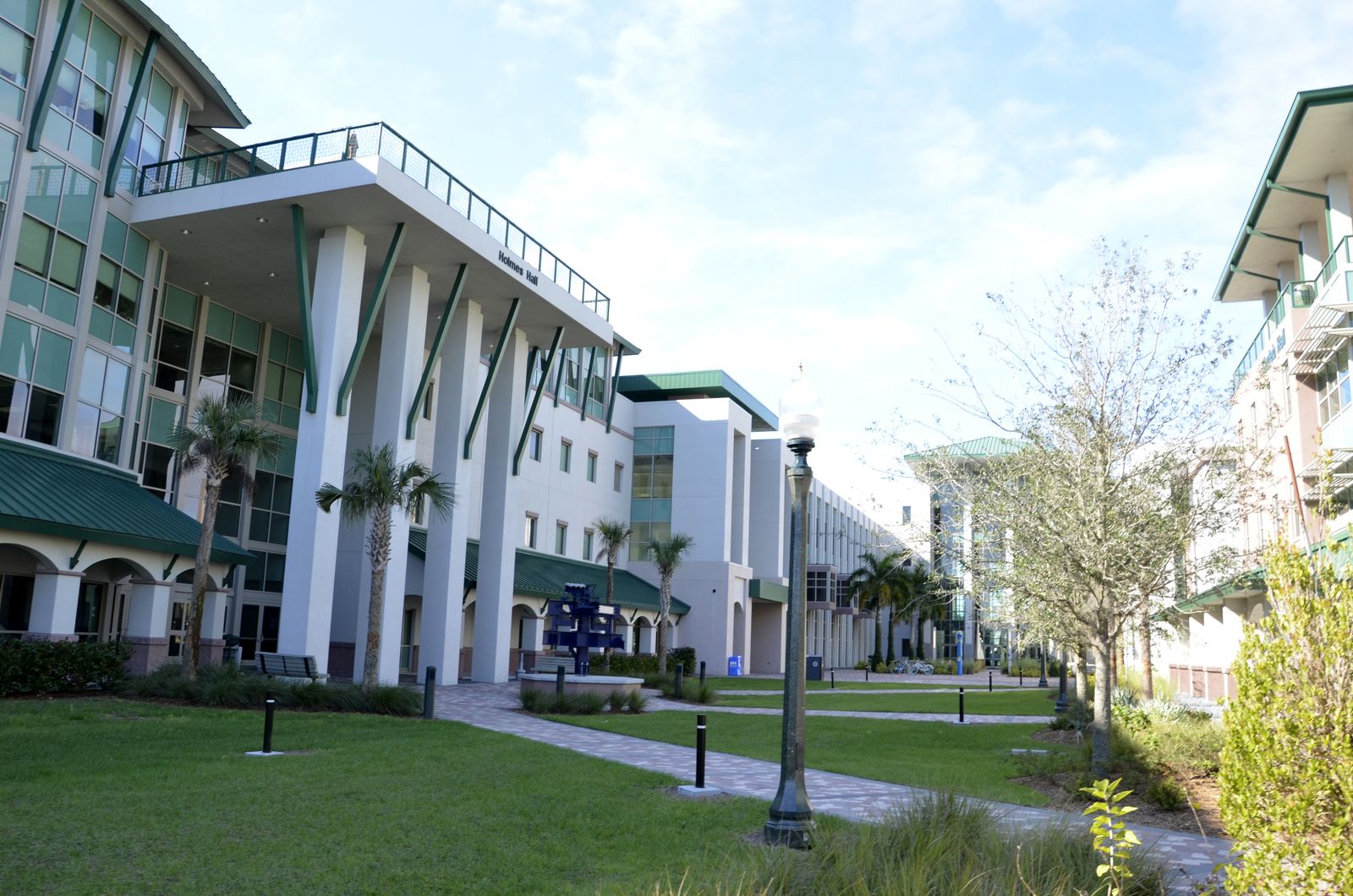
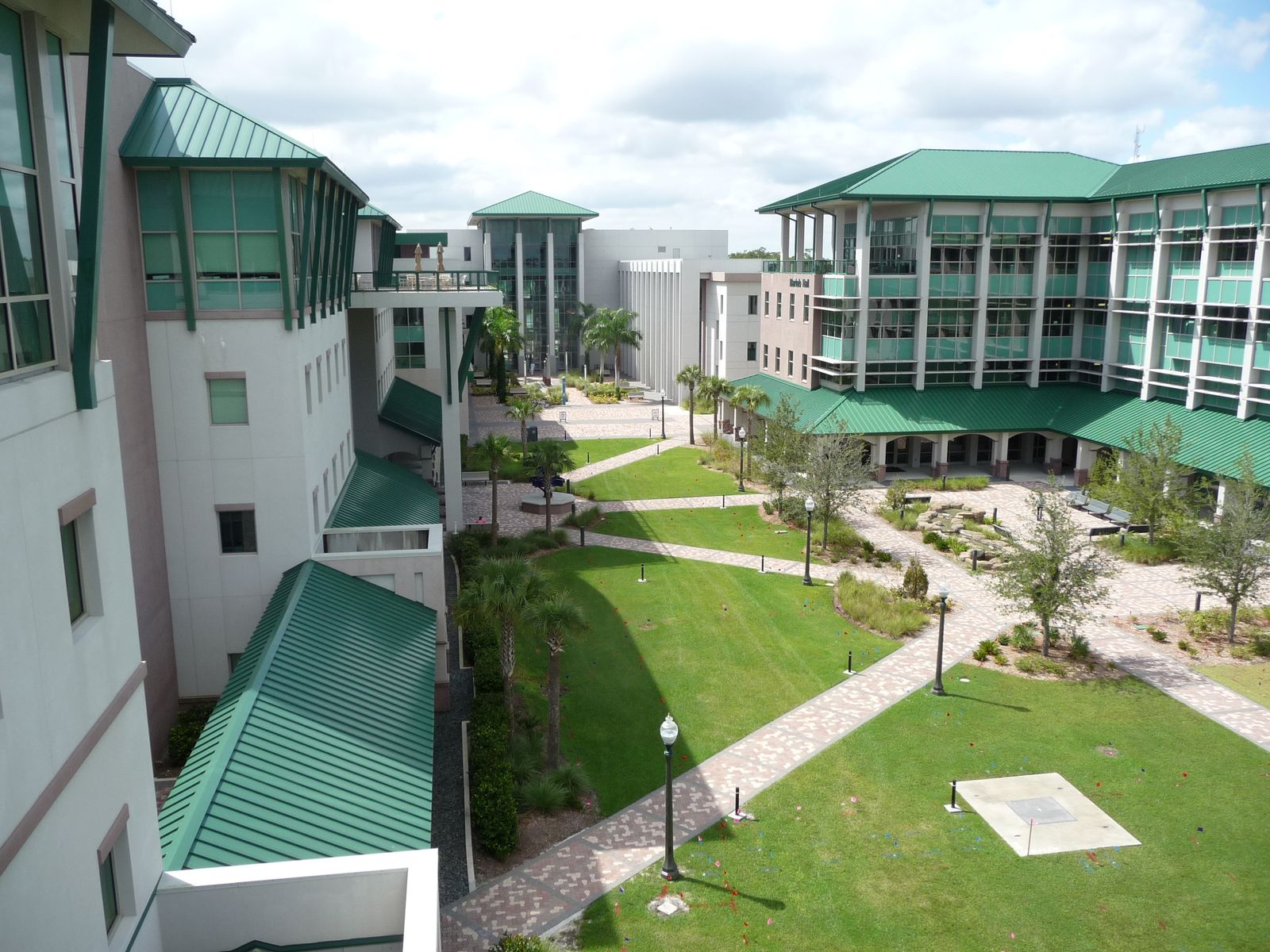
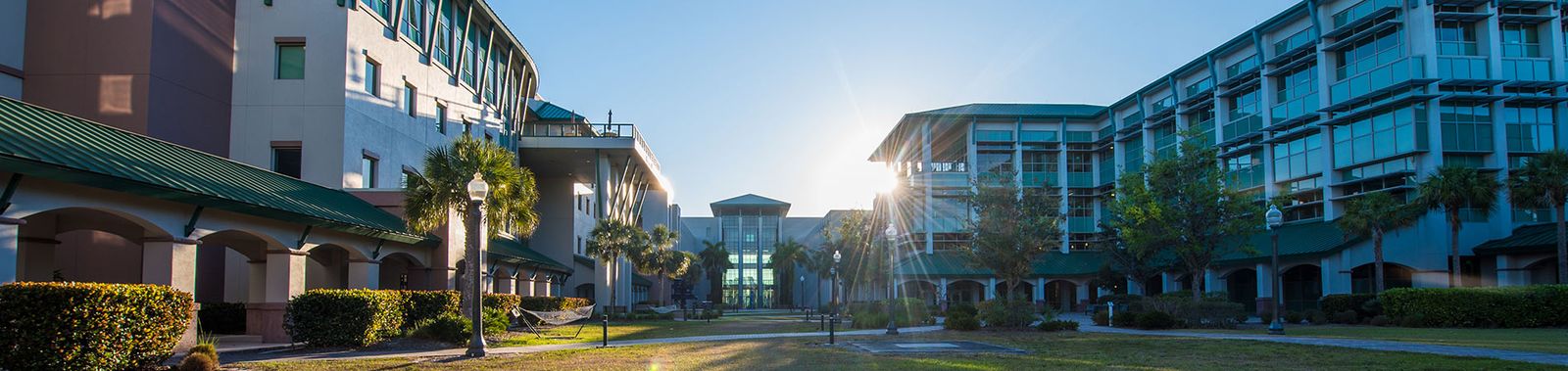
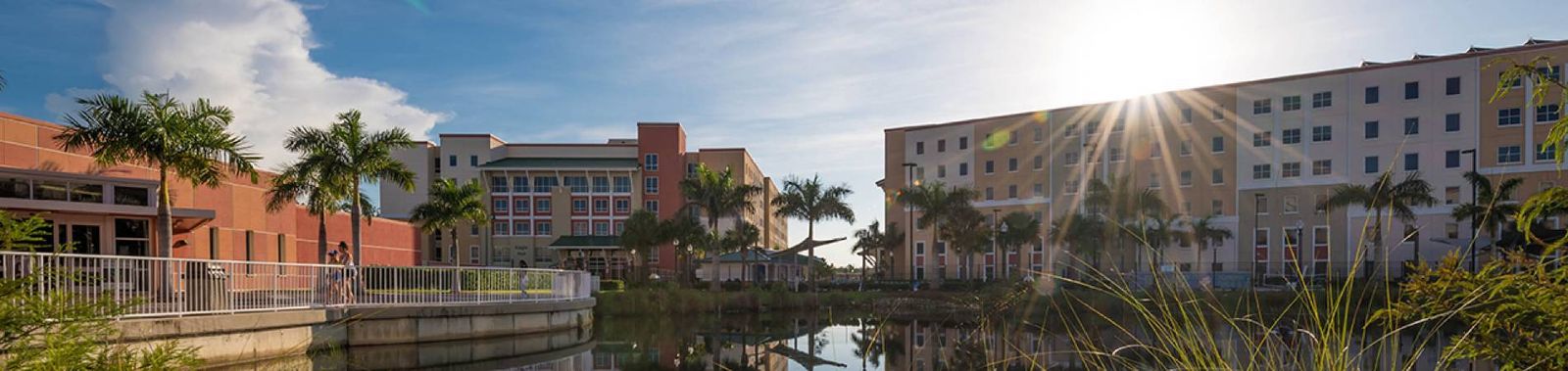
Photos: Brett Levin · CC BY 2.0 (Wikimedia Commons), Florida Gulf Coast University, Jenstew2012 · CC BY 3.0 (Wikimedia Commons), Twhair (Thomas Hair) · CC BY-SA 3.0 (Wikimedia Commons)

There is no requirement to live on campus in the first year, which opens up sharing an apartment off campus — usually cheaper, with transport left to solve.

Photos: Brett Levin · CC BY 2.0 (Wikimedia Commons), Florida Gulf Coast University

City

Living in Fort Myers

ItemReference
One-bedroom rent off campus$1,316 / month
Public transportLeeTran buses (Lee County): $1.50 a ride, $4 day pass, $15 7-day pass, $40 31-day pass; students pay $25 for the 31-day pass ($12 for 7 days) with a LeeTran student ID issued at the Rosa Parks Transfer Center. Route 60 serves the campus. On campus the Eagle Express shuttle is free between the residence villages and main campus (weekdays, ~7am-10:30pm in fall/spring) and Gulf Coast Town Center runs a free shuttle from SoVi and NLV. A car is still the norm.
Nearest airportSouthwest Florida International Airport (RSW), about 10 km (6 mi) from campus - FGCU suggests Uber/taxi on arrival; Fort Lauderdale (FLL), Miami (MIA) and Tampa (TPA) are under 3 hours by car and the Red Coach bus links FGCU to Florida's major airports.
Distance to Orlando263 km
Distance to Miami228 km
ClimateTropical monsoon climate (Köppen Am, 1991-2020 normals): mild winters with January highs near 75 F (24 C), hot humid summers with July-August highs near 92 F (33 C) and near-daily showers June-September (Fort Myers logs 89 thunderstorm days a year, the most in the US); hurricane season June 1-November 30.
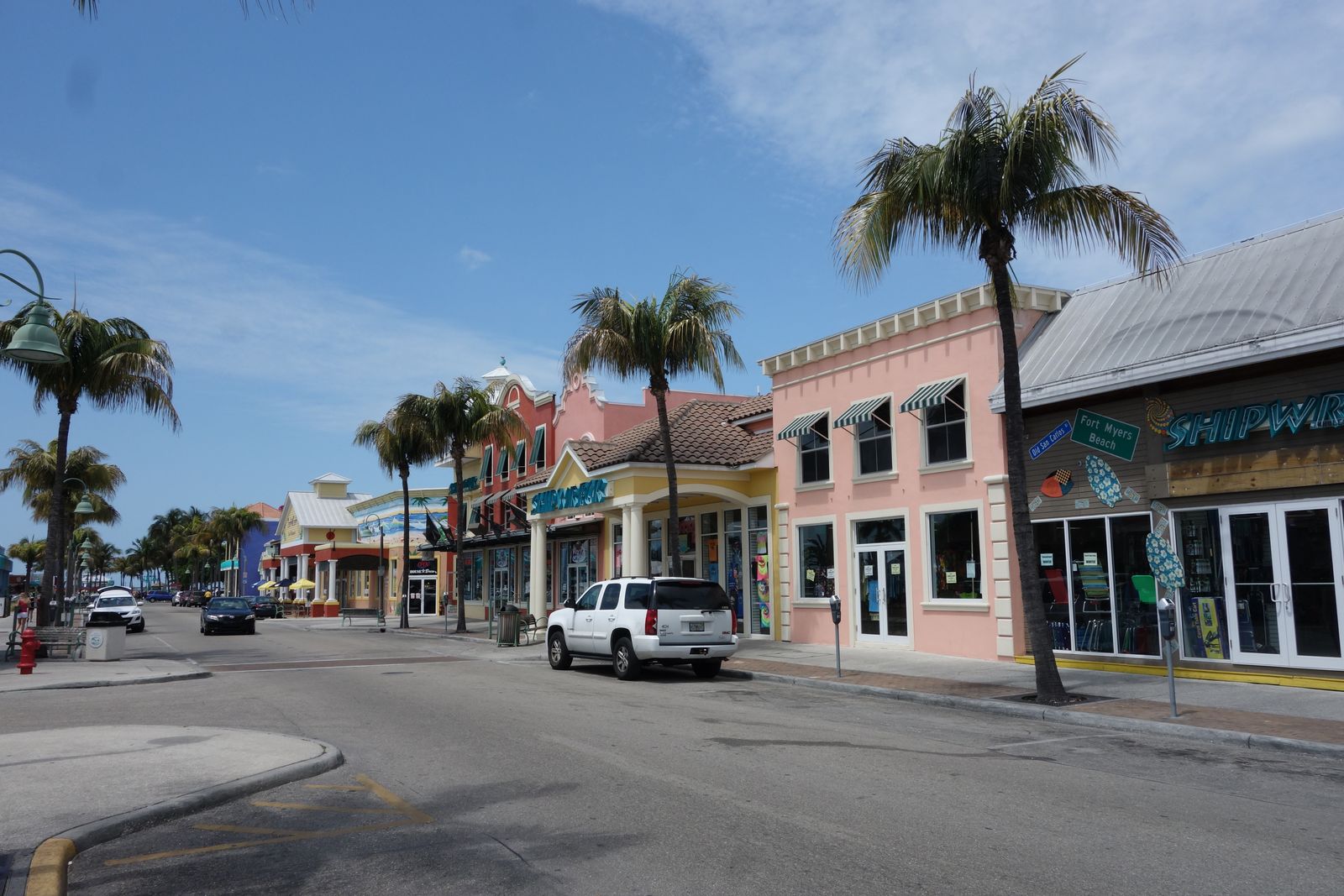
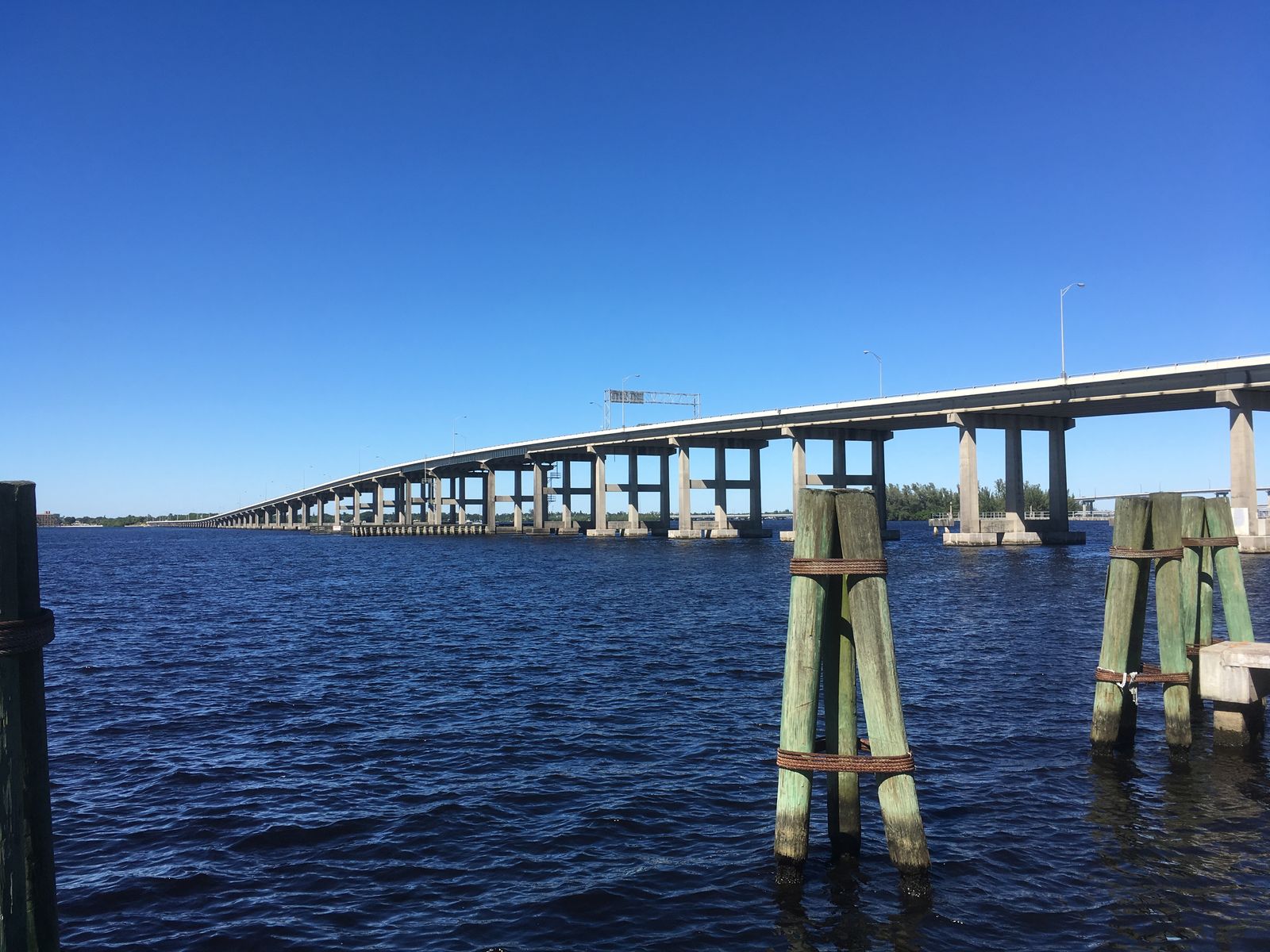
Photos: Paddy1111 · CC BY-SA 3.0 (Wikimedia Commons), Sanibel sun · CC BY-SA 4.0 (Wikimedia Commons)

F-1 students may work on campus up to 20 hours a week while classes are in session and full-time (over 20 hours) during holidays and breaks; you must be enrolled full-time and have a Social Security Number before starting; a new student may begin up to 30 days before classes start. Jobs are limited and usually found by word of mouth.

Careers

Working during and after the course

The median salary of graduates from this university is $59,369 a year, according to the College Scorecard, a US government public database.

On an F-1 visa you can work up to 20 hours a week on campus during term, and full time during breaks.

CPT allows an off-campus internship when it forms part of your program's curriculum, with university authorisation.

OPT gives 12 months of work authorisation in your field after graduation.

STEM-designated programs allow a request for a 24-month extension of OPT — up to 36 months of authorised work in total after graduation.

Immigration rules change — verified on 2026-09-15. Confirm with the university's international student office before making any decision based on this page.

Compare

How it compares with other Florida universities

The universities below are the closest to this one in total cost. Compare before deciding: the tuition gap between two of them is usually larger than any merit scholarship.

UniversityTotal cost per yearAverage SATMinimum TOEFL
Florida Gulf Coast University (this page)$44,141112079
Florida State University$42,65913004 (1–6 scale)
New College of Florida$47,00512004 (1–6 scale)
The University of Tampa$50,12411804 (1–6 scale)

FAQ

Frequently asked questions

How much does it cost to study at Florida Gulf Coast University?

The estimated total — tuition, housing and health insurance — is $44,141 per year before any scholarship. Books, transport and course fees are not included. We prefer that you plan with this number and be surprised for the better.

What English scores does Florida Gulf Coast University require?

TOEFL 79 or higher, or Duolingo 110 or higher. Duolingo policies change often, so we confirm the current rule before you apply. If your score is below the minimum, prep closes that gap before the deadline.

Do I need the SAT to get into Florida Gulf Coast University?

Not always for admission, but almost always for merit scholarships. The admitted average is around 1120. Without an SAT score you can be admitted and pay full price; with a competitive score, the same university can cost much less.

How does Florida Gulf Coast University read a Brazilian high-school transcript?

The ENEM plays no part. The university converts the transcript grades to the American 0–4 GPA scale from a sworn translation. Averages between 7 and 8 usually land near 3.0; above 9, near 4.0. The minimum required is 2.8.

When should I apply to Florida Gulf Coast University?

The fall entry deadline is July 1, 2027, and spring entry is November 1, 2026. Start 10 to 12 months ahead: transcript translation, English score and proof of funds are the steps that delay applications most.

Can I work while studying at Florida Gulf Coast University?

On an F-1 visa you can work up to 20 hours a week on campus during the term and full time during breaks. After graduation, OPT gives 12 months of work authorization in your field, and STEM majors can request 24 more.

How hard is it to get into Florida Gulf Coast University?

Florida Gulf Coast University admits 63% of applicants. The published minimum GPA for international applicants is 2.8 on the American 0–4 scale — a Brazilian transcript is converted to that scale from a sworn translation. The SAT range and average GPA of admitted students, where the university publishes them, are in the Admission section of this page. Below those marks admission is still possible; what gets harder is merit aid.

What is Florida Gulf Coast University's tuition for international students?

$28,019 a year at the out-of-state rate, which is what a Brazilian pays. With housing, meals and health insurance the estimated total is $44,141 — about R$ 227,768 in Brazilian reais at R$ 5.16 to the dollar. Merit scholarships reduce tuition, not the other items.

Is Florida Gulf Coast University or Florida State University more expensive?

On estimated total cost per year, Florida Gulf Coast University comes to $44,141 and Florida State University to $42,659. The gap between the two is usually larger than any merit scholarship, so compare total cost before comparing scholarships.

Sources

Where these numbers come from

Every block on this page carries its own verification date. Costs and admission requirements come from the Common Data Set and the official international admissions page. Enrollment, acceptance and graduation figures come from College Navigator, the US Department of Education's public database.

Converted to Brazilian reais at R$ 5.16 to the dollar on 2026-08-15. Exchange rates move; the dollar figures are the reference.

Data verified on 2026-09-15.

Reviewed by Elvis Arias, ICEF-certified education advisor, floridabrazil.org. Independent educational advisory: we are not the Florida-Brazil Linkage Institute or any university, and we never promise scholarship percentages.

Sources: College Scorecard · Common Data Set · College Navigator · Official university site

Apply with us

We are an allied agency of this university: an application handled by us costs you nothing extra, and you get an advisor looking after every step.

Talk to an advisor

Reply within 1 business day. No commitment.