Independent guide to Florida universities for Brazilian and international students — real costs, verified merit scholarships, admission step by step
English · Português

Tallahassee, Florida · Public university

Florida State University (FSU) for Brazilian students

Tuition, acceptance rate, scholarships with conservative numbers and the admission process step by step — in dollars and Brazilian reais — updated 2026-09-08. Este guia em português →

Tuition/year
$25,702
Total cost/year
$42,659
In reais (R$)
R$ 220,120
Talk to an advisor

Reply within one business day. No obligation.

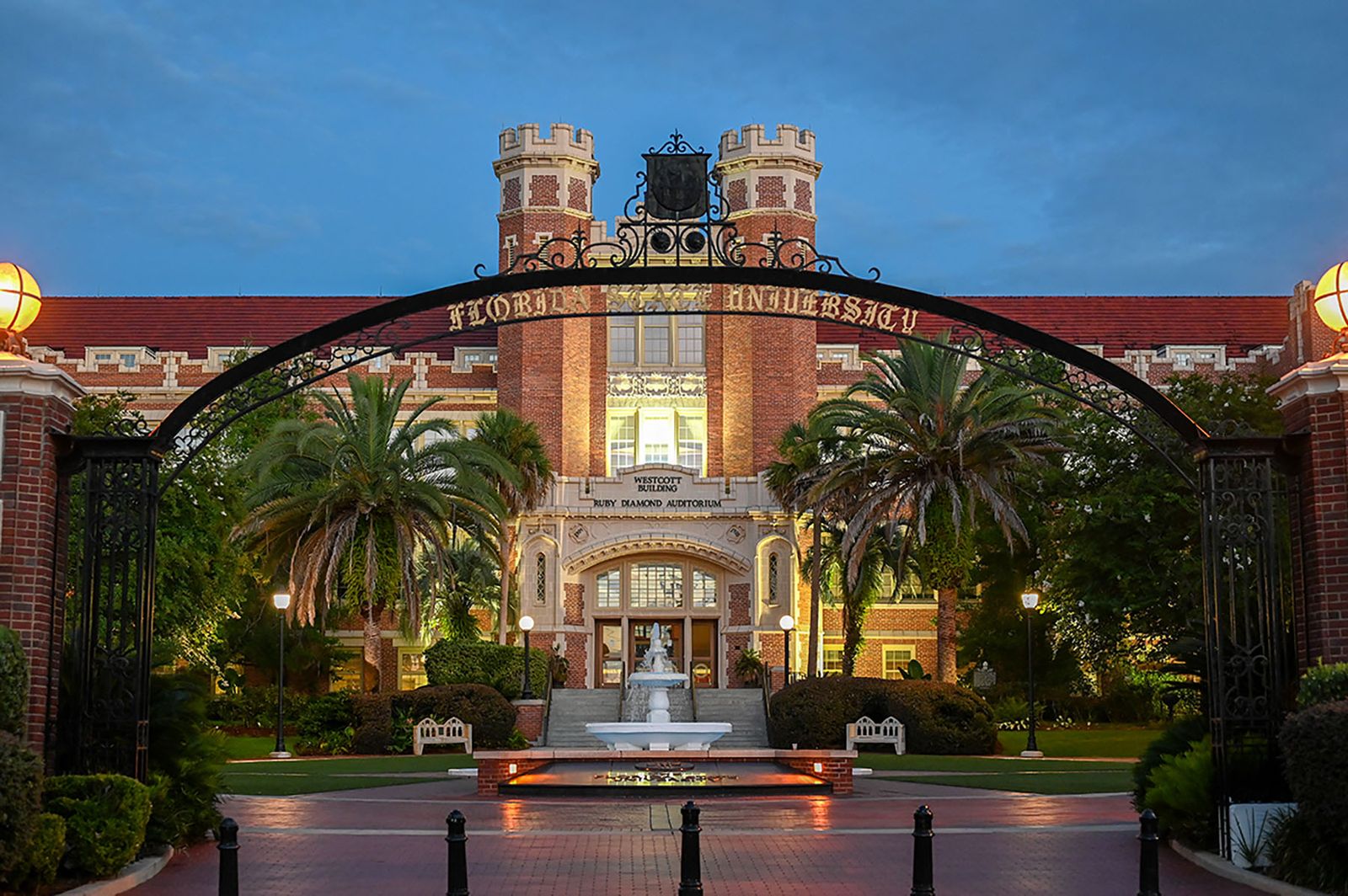
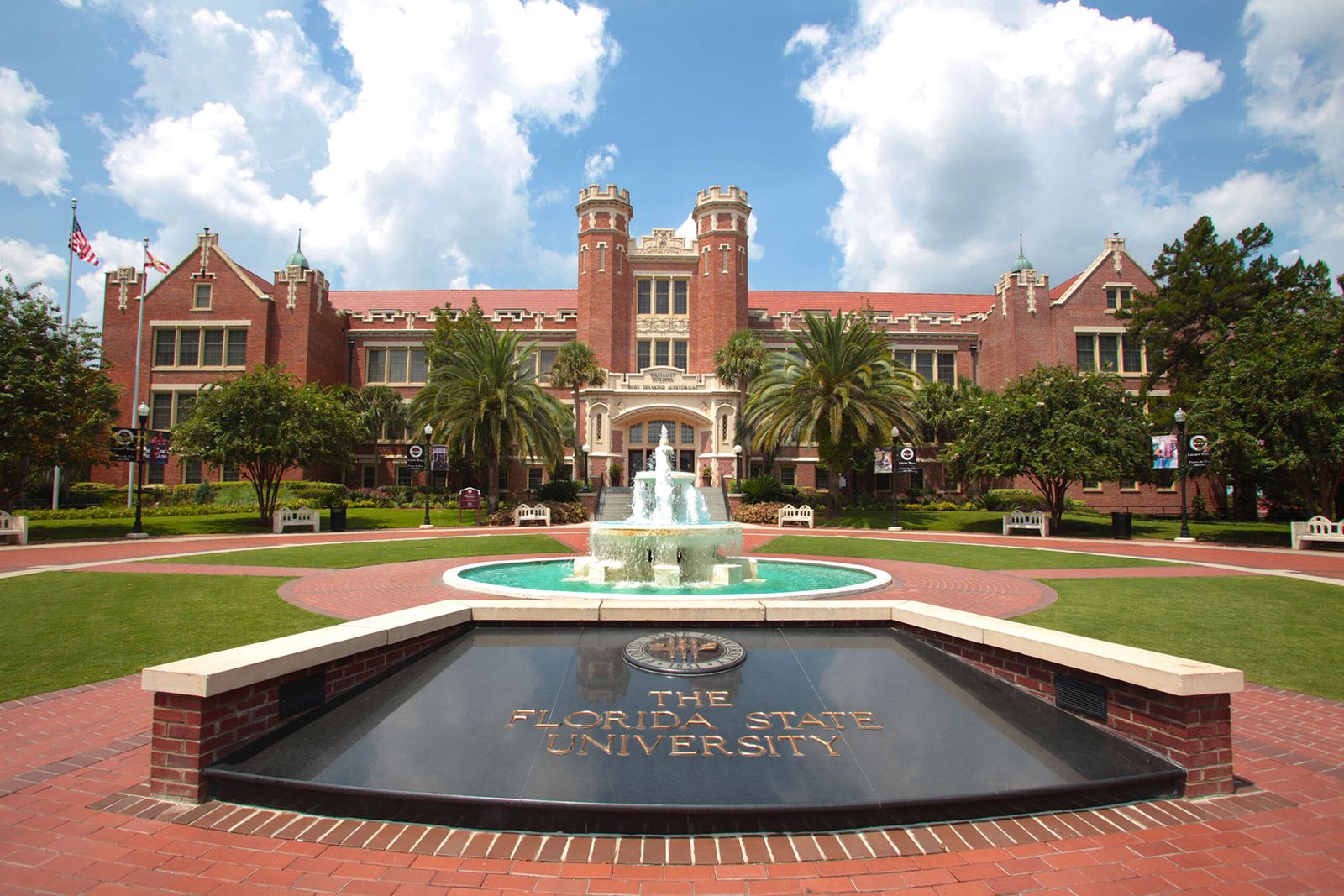
The Westcott Building, Florida State University's twin-towered brick landmark, with Westcott Fountain and The Florida State University sign in the foreground on a blue-sky day in Tallahassee
Photo: Florida State University

Profile

Florida State University by the numbers

The figures below come from the US Department of Education's public databases and from Florida State University's own Common Data Set. They let you gauge the size of the institution, the real level of competition and the odds of finishing on time.

Acceptance rate
24%
Undergraduate students
32,720
Total students
43,889
International students
2.6%
Student-faculty ratio
17
Graduation rate (6 years)
86%
Founded
1851
Campus setting
Urban, midsize city

Admission

Florida State University acceptance rate: how hard it is to get in

Florida State University admits 24% of applicants, according to College Navigator, the US Department of Education's public database.

The middle half of admitted students scored between 1300 and 1410 on the SAT and between 29 and 32 on the ACT. The average high-school GPA of admitted students is 4.29; the published minimum for international applicants is 3.0.

In practice, for a Brazilian applicant: a converted transcript near the average GPA and an SAT inside the range put you in the typical admitted group. Below that, admission is still possible, but merit aid gets harder.

Costs

Florida State University tuition and total cost per year

Tuition at Florida State University for international students is $25,702 a year. With housing, meals and health insurance the estimated total is $42,659 — about R$ 220,120 at R$ 5.16 to the dollar (2026-08-15), verified on 2026-09-08.

ItemAnnual estimate (USD)Approx. in R$
Tuition (out of state)$25,702R$ 132,622
Housing and meals$14,160R$ 73,066
Health insurance$2,797R$ 14,433
Estimated total$42,659R$ 220,120

Estimates for 2026–2027, verified on 2026-09-08. Converted at R$ 5.16 to the dollar (2026-08-15). Books, transport and course fees vary.

Annual cost breakdown: Tuition $25,702, Housing and meals $14,160, Health insurance $2,79760.2%33.2%
Tuition · $25,702Housing and meals · $14,160Health insurance · $2,797

Scholarships

Scholarships at Florida State University: conservative numbers

ScholarshipAmount per yearCriteriaRenewableDeadline
University Out-of-State Tuition Waiver (Merit)$18,452Admitted non-Florida first-year students, international included ('Admitted international first-year students are automatically considered for our out-of-state tuition waiver scholarship'); based on academic performance and test scores, no separate application; 100% waiver of the out-of-state portion of tuition (about $609 per semester hour, $18,452 at 30 hours, $73,808 over four years, prorated to actual enrollment). Renewal: 15 credit hours each semester, cumulative FSU GPA 3.0, degree progress.YesDecember 1 priority (complete application by the Regular Decision deadline)
University Out-of-State Tuition Waiver (Talent - Fine Arts)$9,150Non-Florida first-years in a fine-arts program, recommended by the program after an audition, interview and/or portfolio review; 50% waiver of the out-of-state portion of tuition (about $305 per semester hour, $9,150 at 30 hours, $36,660 over four years). Renewal: 15 credits/semester, 3.0 FSU GPA, continued enrollment in the major. International eligibility not stated.YesDecember 1 priority
Presidential Scholars Program$10,500 – $28,952FSU's premier university-funded merit scholarship: $42,000 over four years plus an out-of-state tuition waiver valued at $73,808; requires applying to the University Honors Program (December 1); invitation-only with interview. International eligibility not stated.YesDecember 1 (Honors Program application)
Stamps Scholars ProgramFive incoming first-years per year, chosen from the Presidential Scholars pool; valued up to the full estimated cost of attendance for four years including an out-of-state tuition waiver, plus $20,000 in enrichment funding. International eligibility not stated.YesDecember 1 (Honors Program application)

Merit scholarships: students have received between 0% and 25% of tuition (conservative estimate, 2026–2027; verified on 2026-09-08). Typical conditions: Merit out-of-state tuition waiver, automatic for admitted international first-years; score criteria not published. The real amount depends on your profile — we never promise percentages.

Our rule is simple: we would rather you plan with conservative numbers and be surprised for the better — never the other way round. Studying in the United States is not free for anyone.

International aid

Scholarships for international students at Florida State University

Only awards the university itself describes are listed, with the requirements it publishes. Where the official page does not say whether international students may apply, the table says "not stated" — ask before counting on the money.

University Out-of-State Tuition Waiver (Merit) — 100%

Amount per year: 100% waiver of the out-of-state portion of tuition: ~US$609 per credit hour, US$18,452 per year (30 credits), US$73,808 over four years (scholarships page); the renewal page says US$18,270/year and US$73,080 total. Prorated by enrollment; does not cover fees.

Requirements: Admitted non-Florida first-year; automatic selection on classroom performance and test scores. Criteria vary each year; no SAT/ACT/CLT score, no consideration.

International: Yes

Renewal: Automatically renewed each semester with 15 credit hours per semester, cumulative FSU GPA of 3.0 or better and consistent degree progress. Not applicable to study-abroad programs.

Deadline: No separate deadline; the page says apply for admission by December 1 (Regular Decision). Merit priority goes to ED/EA, which international applicants cannot use.

How to apply: Automatic with the admission application; no separate form. Offer shows on the Admissions Portal with the decision.

University Out-of-State Tuition Waiver (Talent) — 50%

Amount per year: 50% waiver of the out-of-state tuition portion: ~US$305 per credit hour, US$9,150 per year, US$36,660 over four years.

Requirements: Recommended by the fine-arts major program after audition, interview and/or portfolio review; non-Florida resident.

International: Not stated

Renewal: Automatic each semester: 15 credits, FSU GPA 3.0+, consistent progress and continued enrollment in the specified arts major.

Deadline: Apply for admission by December 1.

How to apply: Through the department's audition/portfolio process; no scholarship form.

Mores Scholarship

Amount per year: US$12,000 total, US$1,500 per semester over eight semesters.

Requirements: First-years who stood out in holistic review for character and potential impact. The renewal page says 'qualifying first-year students' with no residency restriction (Vires, by contrast, is Florida residents only).

International: Not stated

Renewal: Automatic each semester: 15 credits, FSU GPA 3.0+, consistent progress.

Deadline: No separate deadline; apply early (Regular Decision December 1).

How to apply: Automatic; no separate application.

IB Diploma Scholarship

Amount per year: US$8,000 total, US$1,000 per semester over eight semesters.

Requirements: Earning the IB Diploma. Students admitted through Seminole Pathways or FSU Next are ineligible.

International: Not stated

Renewal: Automatic each semester: 15 credits, FSU GPA 3.0+, consistent progress.

Deadline: Apply for admission by December 1.

How to apply: Automatic; no separate application.

Sunshine Award

Amount per year: US$4,000 total, US$500 per semester over eight semesters.

Requirements: At the admissions director's discretion for applications that stood out in holistic review; no preset criteria.

International: Not stated

Renewal: Automatic each semester: 15 credits, FSU GPA 3.0+, consistent progress.

Deadline: Apply for admission by December 1.

How to apply: Automatic; no separate application.

Presidential Scholars Program and Scholarship

Amount per year: US$42,000 over four years (US$14,000 Presidential + US$16,000 Vires + US$12,000 enrichment) plus an out-of-state tuition waiver valued at US$73,808 (scholarships page) / US$73,080 (renewal page).

Requirements: High school seniors admitted into the University Honors Program; invitation-only selection with video responses (semi-finalists) and an on-campus interview in Tallahassee (finalists, Recruitment Weekend April 2-3, 2027).

International: Not stated

Renewal: Automatic each semester: 15 credits, FSU GPA 3.0+, consistent progress.

Deadline: FSU application and Honors/Presidential essay by Dec. 1, 2026, 11:59 p.m. EST; semi-finalists notified Feb. 18, 2027; videos due Feb. 28, 2027.

How to apply: Select 'Yes' to 'Are you interested in applying to the University Honors Program?' on the application and submit the Honors supplemental essay on the Admissions Portal; the rest is by invitation.

Stamps Scholars Program and Scholarship

Amount per year: Up to the full estimated cost of attendance for four years, including an out-of-state tuition waiver, plus US$20,000 in enrichment funding. Five awards per year.

Requirements: Chosen from among Presidential Scholars (Honors Program applicants); additional interview with the national Stamps Scholars leadership.

International: Not stated

Renewal: Automatic each semester: 15 credits, FSU GPA 3.0+, consistent progress.

Deadline: Same timeline as Presidential Scholars (Dec. 1, 2026).

How to apply: Automatic through the Honors Program application; invitation-only.

CGE International Undergraduate Tuition Waivers (a partir do 2º semestre)

Amount per year: Waiver of the out-of-state portion for 1 to 12 credit hours per semester according to FSU GPA (minimum 1 credit at GPA 3.5 for summer / 3.7 for fall and spring; maximum 10-12 credits at GPA 4.0). Student still pays the in-state portion and fees.

Requirements: Undergraduate, F-1 status, main campus, at least one completed full-time semester at FSU with 12 graded credits; cumulative GPA 3.5+ (or 3.5 in the most recent full-time semester). Not available at entry. Holders of an admissions waiver are not eligible (except partial top-up to 12 credits).

International: Yes

Renewal: Not renewable: awarded one semester at a time; reapply each semester.

Deadline: Spring 2026: Oct. 10 to Dec. 5, 5 p.m. Summer and Fall 2026: March 2 to May 4, 5 p.m. (separate applications).

How to apply: CGE online form each semester; committee review; result by email after drop/add.

Need-based aid

FSU offers no need-based aid to international first-years: need-based aid runs through the FAFSA, limited to citizens and residents. The Center for Global Engagement lists only Southern Scholarship Foundation cooperative housing, the OAS Rowe Fund interest-free loan (open to Brazilians) and Fulbright, which is graduate only.
Scores

What Florida State University asks of Brazilian applicants

RequirementReference
SAT (25th–75th percentile)1300 – 1410
ACT (25th–75th percentile)29 – 32
Average GPA of admitted students4.29
Minimum GPA3.0
Minimum TOEFL (1–6 band scale, in force since 21 January 2026)4 · tests taken before 21 January 2026: 80
Minimum IELTS6.5
Minimum Duolingo125
Minimum PTE55
SAT/ACT policySAT or ACT required

FSU requires an English test from every applicant whose native language is not English and publishes no SAT/ACT or English-medium-school waiver. For a TOEFL iBT taken on or after January 21, 2026 the minimum is already on the new 1–6 scale. Two FSU pages disagree on Duolingo (125 on admissions, 120 in the bulletin); the table uses the admissions page.

SAT range of admitted students: 1300 at the 25th percentile and 1410 at the 75th13001410average 1300
Half of admitted students fall inside the highlighted range. Landing below it does not rule you out, but it weighs on merit aid.

How your Brazilian transcript is read

The ENEM plays no part in the review. The university converts your secondary-school grades onto the American 0 to 4 scale, and that number is what appears as your GPA. Averages between 7 and 8 usually land near 3.0; above 9, near 4.0. The conversion is done either by the university itself or by a credential evaluation service, and the transcript has to be translated by a sworn translator.

Why the score is worth money

Florida State University's merit scholarship is not a single figure. It is a range, $18,452 to $28,952 per year. Where you land inside it depends on your transcript, the rigour of the courses you took and your SAT or ACT score when you choose to submit one.

Merit scholarship range: $18,452 to $28,952 per year$18,452$28,952floorceiling

The distance between floor and ceiling is $10,500 per year. Over a four-year degree, $42,000, or about R$ 216,720. That is the size of the difference a better score can make, and it is why the test is worth sitting even when it is optional.

The university superscores: it takes your best score in each section across every test date you submit. Retaking the test, in practice, can only help.

Tests

Admission tests at Florida State University

Admitted-student profile according to U.S. News & World Report

U.S. News publishes the range covering the middle half of admitted students, not an average. Use the range as a gauge of competitiveness (2026 data).

ItemReference
SAT (25th–75th percentile)1270 – 1410
ACT (25th–75th percentile)29 – 32
Average high-school GPA3.7
Acceptance rate24%

Source: U.S. News & World Report

Accepted English tests and minimum scores

TestMinimum scoreNote
TOEFL iBT (taken before January 21, 2026, 0–120 scale)80Official table: 'TOEFL iBT test taken before January 21, 2026. (IBTOEFL) — 80'. Required of 'all international applicants whose native language is not English'. The registrar bulletin still lists only the 80.
TOEFL iBT (taken on or after January 21, 2026, new 1–6 scale)4.0Official table: 'TOEFL iBT test taken on or after January 21, 2026. (IBTOEFL) — 4.0'. FSU already publishes the minimum on the new 1–6 band scale.
IELTS Academic6.5Official table: 'International English Language Testing System (Academic IELTS) — 6.5'. No section minimums published.
PTE Academic55Official table: 'Pearson Test of English (PTE) — 55'.
Michigan Language Assessment (MLA / MET)55Official table: 'Michigan Language Assessment (MLA) — 55'.
Duolingo English Test125The official proficiency page says 'Duolingo — 125'. The University Bulletin (registrar.fsu.edu) says '120 on the Duolingo Examination'. Two FSU sources disagree; the admissions page is newer (it already has the new TOEFL scale). Publish 125 and flag the discrepancy.
Cambridge C1 Advanced or C2 Proficiency180 (Cambridge English Scale)Official table: 'Cambridge C1 Advanced Level or C2 Proficiency — 180'.
Cambridge B2 Firstnot listedThe table names only C1 Advanced and C2 Proficiency (180). B2 First appears neither on the proficiency page nor in the Bulletin.
TOEFL Essentialsnot listedNot on the proficiency page or in the Bulletin.
iTEPnot listedNot on the proficiency page or in the Bulletin.
ELS (level 112)not listedNot on the proficiency page or in the Bulletin. The Bulletin instead accepts 'the successful completion of Level 8 (Advanced Level) at Florida State University's Center for Intensive English Studies' (FSU's own intensive English program).
Waiver by SAT/ACT English sectionnot listedNone of the pages checked offers an English-test waiver for an SAT EBRW or ACT English score. The requirement is defined by native language: 'required of all international applicants whose native language is not English'.
Waiver for English-medium schoolingnot listedNo English-medium-school waiver is published. The only published criterion is 'native language is not English'. Anyone wanting a waiver must ask admissions@fsu.edu; the page does not promise one.

Cambridge English (B2 First, C1 Advanced, C2 Proficiency) appears in the table when the university accepts it. If it is absent, the official page does not list it — do not send a Cambridge certificate in place of the TOEFL without confirming with admissions.

SAT and ACT

SAT, ACT or CLT is required for every first-year applicant, international included, under Florida Board of Governors rules; no test score, no merit scholarship. FSU superscores (highest sub-scores across dates) and, from the 2025-26 cycle, ignores the ACT Science section. International applicants cannot use Early Decision or Early Action.

Is your score below 4 (1–6 scale) on the TOEFL or 125 on the Duolingo test? That does not end the plan — our live prep courses with a teacher exist to close exactly that gap.

Majors

All majors at Florida State University

FSU is best known abroad for film. The College of Motion Picture Arts has its own building, its own selection process with a portfolio and letters, and small cohorts that start making films early. Criminology, theatre, music, dance, creative writing and business are also strong. Engineering is a separate case: the FAMU-FSU College of Engineering is shared with Florida A&M, runs out of its own building in Innovation Park, and students take their early coursework on their home campus before moving there. There is an honors program and a smaller campus in Panama City, on the coast.

There are 166 majors, grouped by the school that offers them, each with the degree code the application form uses. Search by name, or filter by school or STEM.

The 45 majors marked STEM qualify for an extra 24 months of work authorisation on top of OPT — up to 36 months working in the United States after graduation. If you plan to stay, that designation matters more than the name of the degree.

166 majors

Anne Spencer Daves College of Education, Health, and Human Sciences12

Human Development and Family Sciences
Dietetics
Special Education Teaching
Blindness and Low Vision
Exercise Physiology
STEM
Sport Management
Social Science Education
English Education
Nutrition and Food Science
Elementary Education
Elementary Education PC
Athletic Training

College of Applied Studies (Panama City)6

Communication
Professional Communication
Law Enforcement Intelligence : Public Safety and Security
Crime Scene Investigation : Public Safety and Security
Law Enforcement Operations : Public Safety and Security
Financial Planning

College of Arts and Sciences57

Anthropology
Classical Archaeology
Computational Biology
BiologySTEM
Computational Biology
Computer ScienceSTEM
Biomathematics
STEM
Biochemistry
STEM
Cyber Criminology
Computer ScienceSTEM
Classical Civilization
Computational Science
STEM
Computer Science, BA
STEM
Computer Science, BS
STEM
Environmental Science & Policy
STEM
Environmental Science
STEM
Actuarial Science
STEM
Biological Science
STEM
Physical Science
STEM
Chemical Science
STEM
Human Rights and Social Justice
Statistics
STEM
Classics and Religion
Women’s Studies
Middle Eastern Studies
Philosophy
Physics
STEM
Physics & Astrophysics
STEM
Geology
STEM
Greek
Greek and Latin
History
Ancient History
Humanities
Latin
English
Editing, Writing, & Media
English
Creative Writing
English
Literature, Media, and Culture
Linguistics
General Linguistics, Linguistics & Languages
Modern Languages, Literatures, and Cultures
German
Modern Languages, Literatures, and Cultures
Chinese
Modern Languages, Literatures, and Cultures
Dual Languages
Modern Languages, Literatures, and Cultures
Spanish
Modern Languages, Literatures, and Cultures
French
Modern Languages, Literatures, and Cultures
Italian
Modern Languages, Literatures, and Cultures
Japanese
Modern Languages, Literatures, and Cultures
World Literature & Cultural Studies
Modern Languages, Literatures, and Cultures
Russian
Mathematics
STEM
Applied Mathematics
STEM
Meteorology
STEM
Neuroscience: Cell and Molecular Neuroscience
STEM
Neuroscience: Behavioral Neuroscience
STEM
Computer Programming and Applications BA
STEM
Psychology
Chemistry
STEM
Environmental Chemistry
STEM
Materials Chemistry
STEM
Religion
Religion & Classics

College of Communication and Information7

Communication Science & Disorders
Audiology & Speech Pathology
Communication
Media and Communication StudiesSTEM
Communication
Digital Media ProductionSTEM
Information, Communication & Technology
STEM
Advertising
Communication
Public Relations
Communication
Information Technology
STEM

College of Criminology and Criminal Justice2

Cyber Criminology
CriminologySTEM
Criminology - Criminal Justice

College of Fine Arts10

Art, Studio BA
Art, Studio BFA
Dance
Interior Design
Design and Visual Communication
Stage Management
Art History
Theatre, BA
Theatre, BFA
Acting
Music Theatre
School of Theatre

College of Medicine3

Interdisciplinary Medical Sciences: Community Patient Care
STEM
Interdisciplinary Medical Sciences: Health Management, Policy and Information
STEM
Interdisciplinary Medical Sciences: Clinical Professions
STEM

College of Motion Picture Arts2

Motion Picture Arts
Animation & Digital Arts
Motion Picture Arts
Production

College of Music21

Music Composition
Music Education
Choral
Music Education
General
Music Education
Instrumental
Music Therapy
Music
General
Music
Jazz
Music
Commercial
Music
Community
Music
Sacred
Music
Business
Music Performance
Voice
Music Performance
String
Music Performance
Harp
Music Performance
Jazz
Music Performance
Piano
Music Performance
Woodwind, Brass, Percussion
Music Performance
Guitar
Music Performance
Organ
Music Theatre
College of Music
Music Theory

College of Nursing1

Nursing

College of Social Sciences and Public Policy20

Political Science
Interdisciplinary Social Science
Economics
STEM
African American Studies
Civics and Liberty Studies
Constitutional Liberty
Civics and Liberty Studies
Conscience Liberty
Civics and Liberty Studies
Economic Liberty
Civics and Liberty Studies
Educational Liberty
Intelligence Studies
Geography
Emergency Management
Environment and Society
STEM
International Affairs
Broad Curriculum
International Affairs
Asian Studies with Emphasis in Business
International Affairs
Asian Studies
International Affairs
Latin American and Caribbean Studies with Emphasis in Business
International Affairs
Latin American and Caribbean Studies
International Affairs
Russian and East European Studies
Public Health
Sociology

College of Social Work1

Social Work

Dedman College of Hospitality4

Event Management
Hospitality and Tourism Management
Recreation and Tourism Management
Global Club Management and Leadership

FAMU-FSU College of Engineering7

Engineering
BiomedicalSTEM
Engineering
CivilSTEM
Engineering
ComputerSTEM
Engineering
ElectricalSTEM
Engineering
IndustrialSTEM
Engineering
MechanicalSTEM
Engineering
ChemicalSTEM

Herbert Wertheim College of Business10

Management
General
Business Administration
Accounting
Finance
Human Resource Management
Risk Management and Insurance
Marketing
Real Estate
Management Information Systems
Professional Sales

Jim Moran College of Entrepreneurship3

Entrepreneurship
Commercial
Entrepreneurship
STEM
Fashion, Merchandising, and Product Development

Graduate

Graduate study at Florida State University

For master's, FSU offers a combined pathway: you can start graduate coursework as an undergraduate and finish the second degree in less time. The fields most sought by international students are engineering, business, data analytics, public administration and the arts, with formats that range from full-time to evening to online depending on the department. Each department sets its own tests, letters and portfolio requirements, so confirm directly with it before assembling your paperwork.

Close to 19% of Florida State University's graduate students come from outside the United States. It is a far more international room than the undergraduate one, and that changes the experience: almost everyone beside you also arrived recently.

There are 99 programs open to international students, 32 of them STEM-designated.

99 programs

ProgramSTEMGRE or GMAT requiredIntake
Anne Spencer Daves College of Education, Health, and Human Sciences12
Athletic CoachingNo—
Counseling and Human SystemsNo—
Curriculum and InstructionNo—
Educational Leadership and PolicyNo—
Educational PsychologyNo—
Exercise PhysiologySTEMNo—
Food and NutritionNo—
Higher EducationNo—
Human Development and Family ScienceNo—
Instructional Systems and Learning TechnologiesSTEMNo—
Measurement and StatisticsSTEMNo—
Sport ManagementNo—
College of Applied Studies1
Professional CommunicationNoFSpSu
College of Arts and Sciences28
Anthropology—FSpSu
Biological SciencesSTEM—FSpSu
BiostatisticsSTEM——
ChemistrySTEM——
Classics——
Computational Science (MS/PSM)STEM——
Computer ScienceSTEM——
Creative Writing (MFA)NoFSpSu
East Asian Languages and Cultures——
EnglishNoFSpSu
French——
GeologySTEMNoFSpSu
German——
Greek——
History——
Interdisciplinary Data Science (MS)STEM——
Italian Studies——
Latin——
MathematicsSTEM——
MeteorologySTEMNoFSpSu
OceanographySTEMNoFSpSu
Philosophy——
PhysicsSTEM——
Psychology——
Religion——
Slavic——
Spanish——
StatisticsSTEM——
College of Business4
Accounting (MAcc)STEMNoFSpSu
Business Administration (MBA)NoFSpSu
Business Analytics (MS-BA)STEMNoFSpSu
Finance (MSF)STEMNoFSpSu
College of Communication and Information5
Communication and Digital Media StudiesSTEM—FSpSu
Communication Science and DisordersNo—
Information (MSI)STEM——
Information Technology (MSIT)STEM——
Professional CommunicationNoFSpSu
College of Criminology and Criminal Justice1
Criminology——
College of Fine Arts8
Art Education——
Art Therapy——
Arts Administration (Art)——
Dance——
History and Criticism of Art——
Interior Design——
Studio Art (MFA)——
Theatre——
College of Law3
American Law for Foreign Lawyers (LL.M.)—FSpSu
Business Law (LL.M.)—FSpSu
Environmental Law and Policy (LL.M.)—FSpSu
College of Medicine3
Biomedical SciencesSTEM——
Genetic Counseling——
Physician Assistant Practice (MSPAP)——
College of Motion Picture Arts2
Motion Picture Arts (MFA)NoFSpSu
Motion Picture Arts Writing (MFA)NoFSpSu
College of Music8
Arts Administration (Music)——
Music - Liberal Arts——
Music Education——
Music Performance——
Music Theory and Composition——
Music Therapy——
Musicology——
Opera Production——
College of Social Sciences and Public Policy12
Applied Economics——
Asian StudiesNoFSpSu
DemographySTEM——
EconomicsSTEM——
Geographic Information ScienceSTEM——
Geography——
International AffairsNoFSpSu
Political Science (MAAPP)NoFSpSu
Public Administration (MPA)—FSpSu
Public Health (MPH)——
Sociology——
Urban and Regional Planning (MSP)——
College of Social Work1
Social Work (MSW)—FSpSu
Dedman College of Hospitality1
Entrepreneurship - Hospitality Entrepreneurship (MSE)——
FAMU–FSU College of Engineering8
Aerospace Engineering——
Biomedical EngineeringSTEM——
Chemical EngineeringSTEM——
Civil EngineeringSTEM——
Electrical EngineeringSTEM——
Industrial EngineeringSTEM——
Materials Science and EngineeringSTEM——
Mechanical EngineeringSTEM——
Jim Moran College of Entrepreneurship2
Entrepreneurship (MSE)——
Retail Entrepreneurship (MSE)——
FSpSuF = fall (August) · Sp = spring (January) · Su = summer (May)No = GRE/GMAT waived · Yes = required · — = confirm with the program

The STEM designation matters more at master's level than at undergraduate. It allows a request for 24 extra months of OPT on top of the initial 12, which means up to three years working in the United States off a one- or two-year degree.

What the graduate programs require

RequirementReference
Minimum TOEFL (1–6 band scale, in force since 21 January 2026)4 · tests taken before 21 January 2026: 80
Minimum IELTS6.5
Minimum Duolingo125
Application fee$30
Minimum full-time load9 credit hours per semester

GRE and GMAT

29 of the programs above waive the GRE and GMAT. The rest require the test, and a waiver is only considered for applicants holding a business degree from an AACSB-accredited institution. Work experience does not count towards a waiver.

Graduate documents

Beyond a transcript from every institution you attended, with certified translation, the application asks for a personal statement in English, a professional resume and two reference forms from people who can speak to your academic and professional background. A course-by-course credential evaluation is strongly recommended.

Graduate deadlines

IntakeApplication complete by
Fall intakeJuly 1 (university final deadline); most programs close much earlier
Spring intakeNovember 1 (university final deadline); many programs admit in fall only

Deadlines

When to do what

IntakeApplication deadlineScholarship deadline
Fall intakeDecember 1, 2026 (Regular Decision, priority date for scholarships); applications continue until March 1, 2027 as space allowsDecember 1, 2026 (Regular Decision; no SAT/ACT/CLT score, no merit scholarship)
Spring intakeno first-year admission in spring (summer and fall only)

A 12-month timeline

  1. 12 to 10 months out — choose the universities and check whether your English score already clears the minimum. If it does not, this is where prep comes in.
  2. 10 to 8 months out — translate the transcript and request the credential evaluation where required. It takes 2 to 6 weeks and is the single biggest source of delay.
  3. 8 to 6 months out — submit the application and pay the $30 fee.
  4. 6 to 4 months out — acceptance letter and proof of funds. The university only issues the I-20 after approving the bank statement.
  5. 4 to 3 months out — pay the SEVIS fee, complete the DS-160 and book the consular interview. Confirm the fee amounts on the official site: they change.
  6. 3 to 1 month out — consular interview, visa in the passport, flights, insurance and housing.

Documents

What you need to gather

The order below is the order in which Florida State University asks for each item. Start with the first two: they depend on third parties and they are what stalls the process.

  1. Complete secondary-school transcript, translated into English by a sworn translator.
  2. Credential evaluation by a recognised service (WES, SpanTran, ECE). It takes 2 to 6 weeks — start here.
  3. English score — TOEFL from 4 (1–6 scale), or Duolingo from 125.
  4. SAT or ACT score, where required and whenever you want to compete for merit aid.
  5. Letter of recommendation from a teacher or coordinator.
  6. Personal statement in English.
  7. Proof of funds — a bank statement showing funds for the first year. It is the document that releases the I-20, and the one most often sent back for correction.
  8. Valid passport and the $30 application fee.

Campus

Campus life and housing

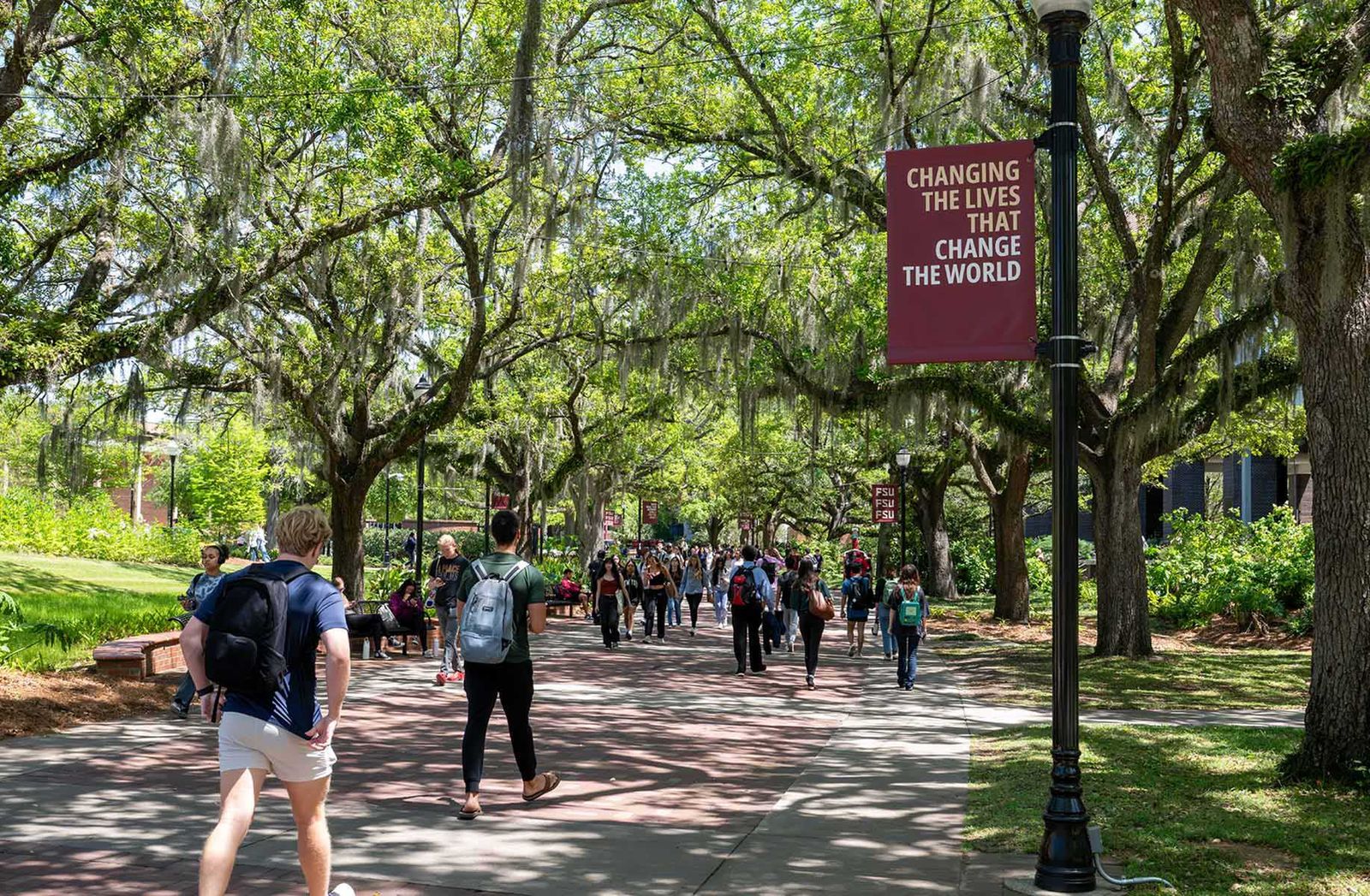
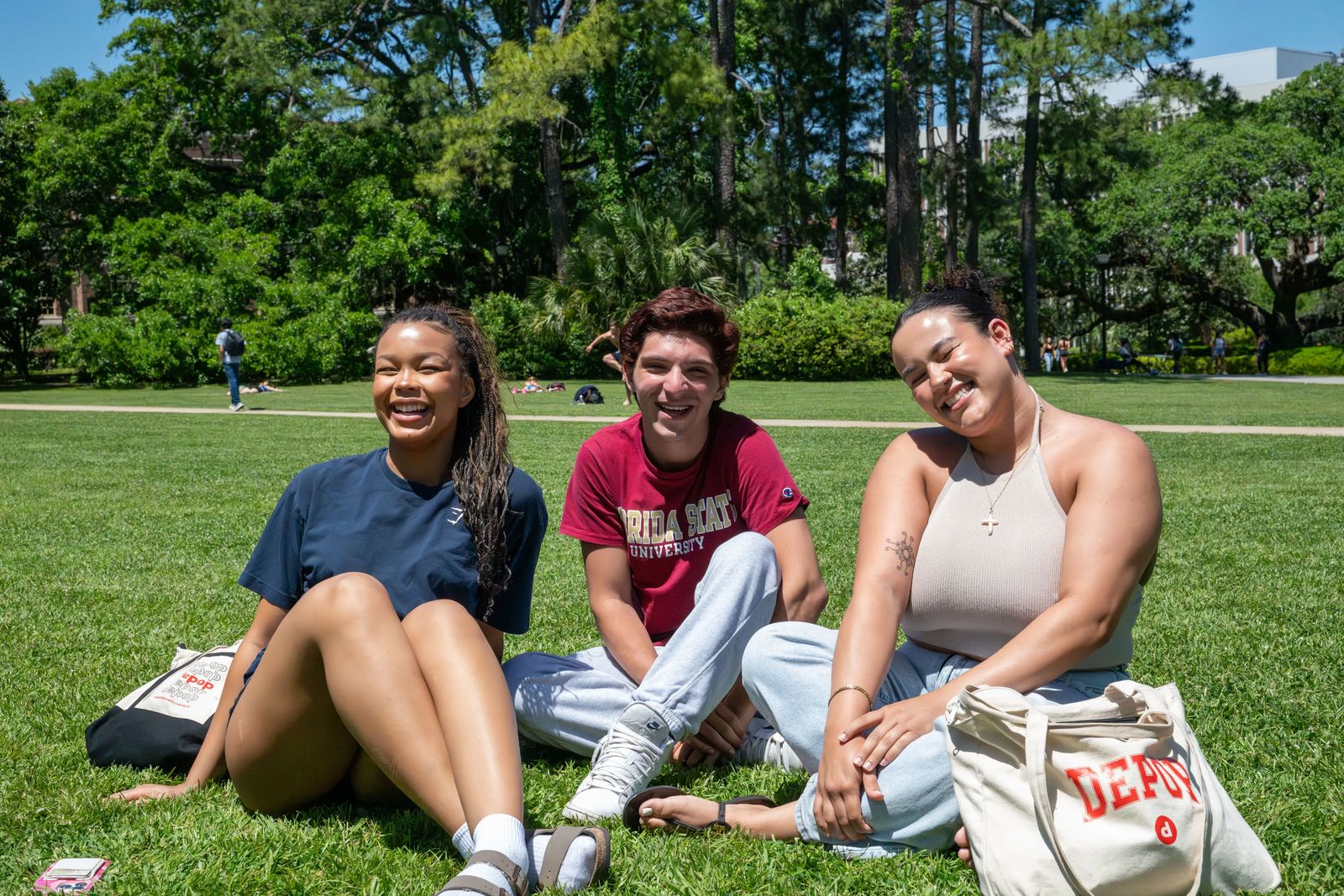
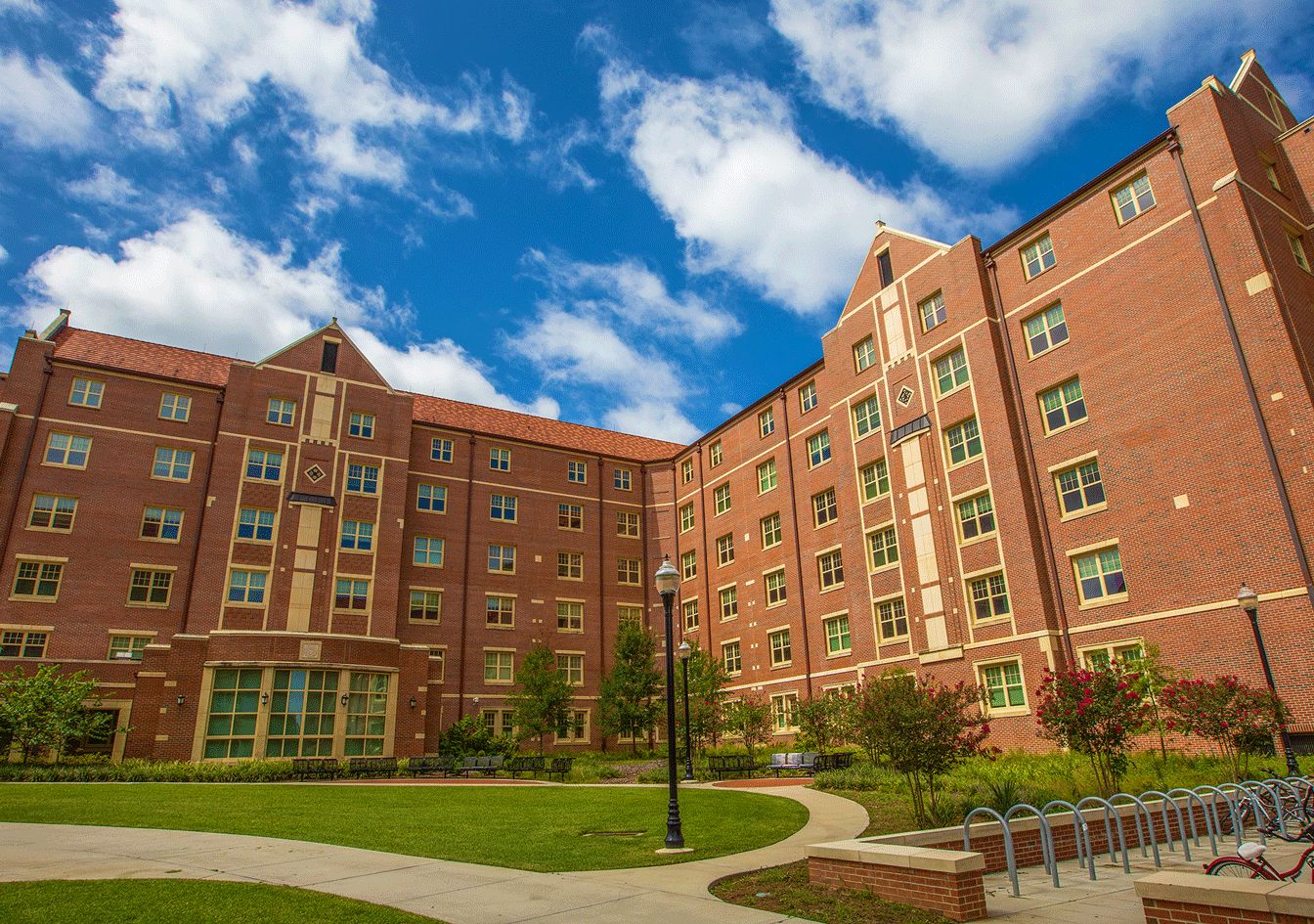
FSU sits on a stretch of red brick in the middle of Tallahassee, and the first surprise is the terrain. North Florida has hills, oaks draped in Spanish moss and reddish soil. You walk up College Avenue and reach Westcott, the landmark building, with its fountain out front. From there inward, you can cross the whole place on foot. Landis Green is the lawn where everyone lies down between classes, and Strozier Library stays open late and turns into one big shared study room during exam week.

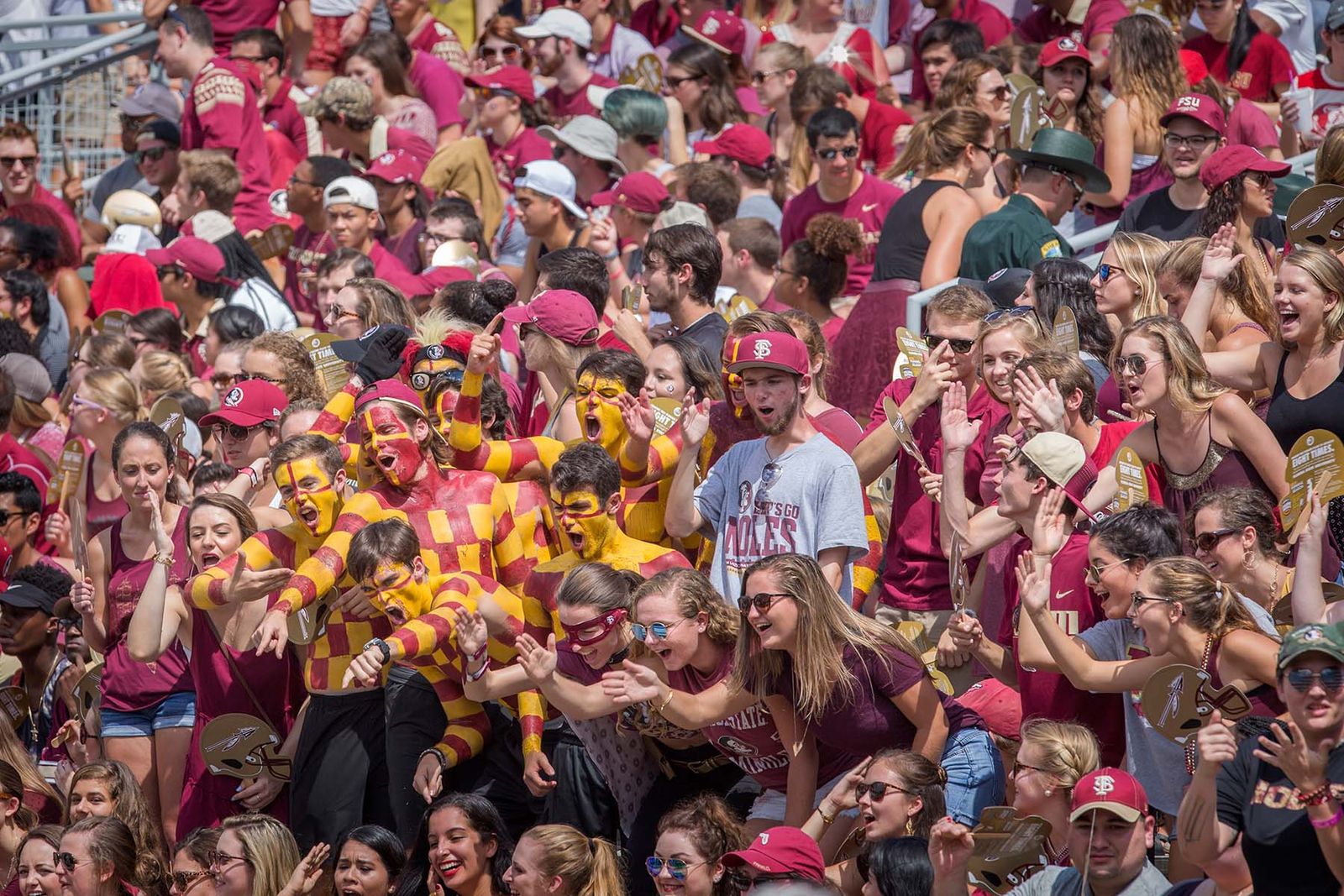
On football Saturdays the city wears garnet and gold. Osceola rides into Doak Campbell with a flaming spear and the stadium does the war chant together. For an international student it is the part that takes longest to make sense, and it usually ends up being the favorite part of the year.

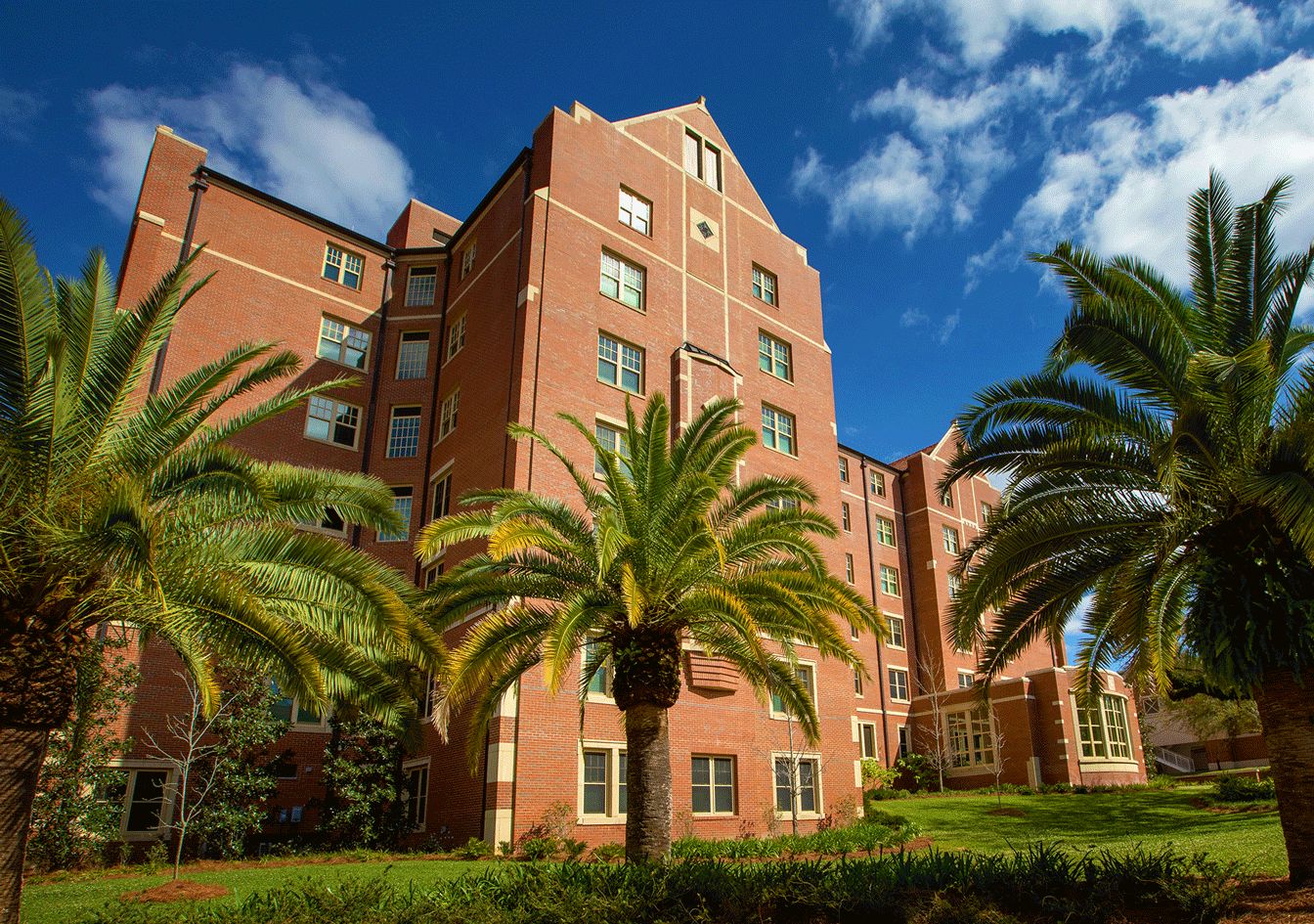
First-year housing is mostly suite style, with a shared bedroom and a bathroom split among a few people. No hall requires a meal plan, but in the older halls near Landis almost everyone signs up for one; the newer cluster has kitchens and lounges. Contracts are filled in the order they arrive, so signing early means better choices. Bring extra-long twin sheets and talk to your roommate first, so the two of you do not show up with two mini fridges.

Photos: Florida State University, Florida State University (FSU Photography Services), Florida State University (University Housing)

There is no requirement to live on campus in the first year, which opens up sharing an apartment off campus — usually cheaper, with transport left to solve.

Photos: Florida State University (University Housing)

City

Living in Tallahassee

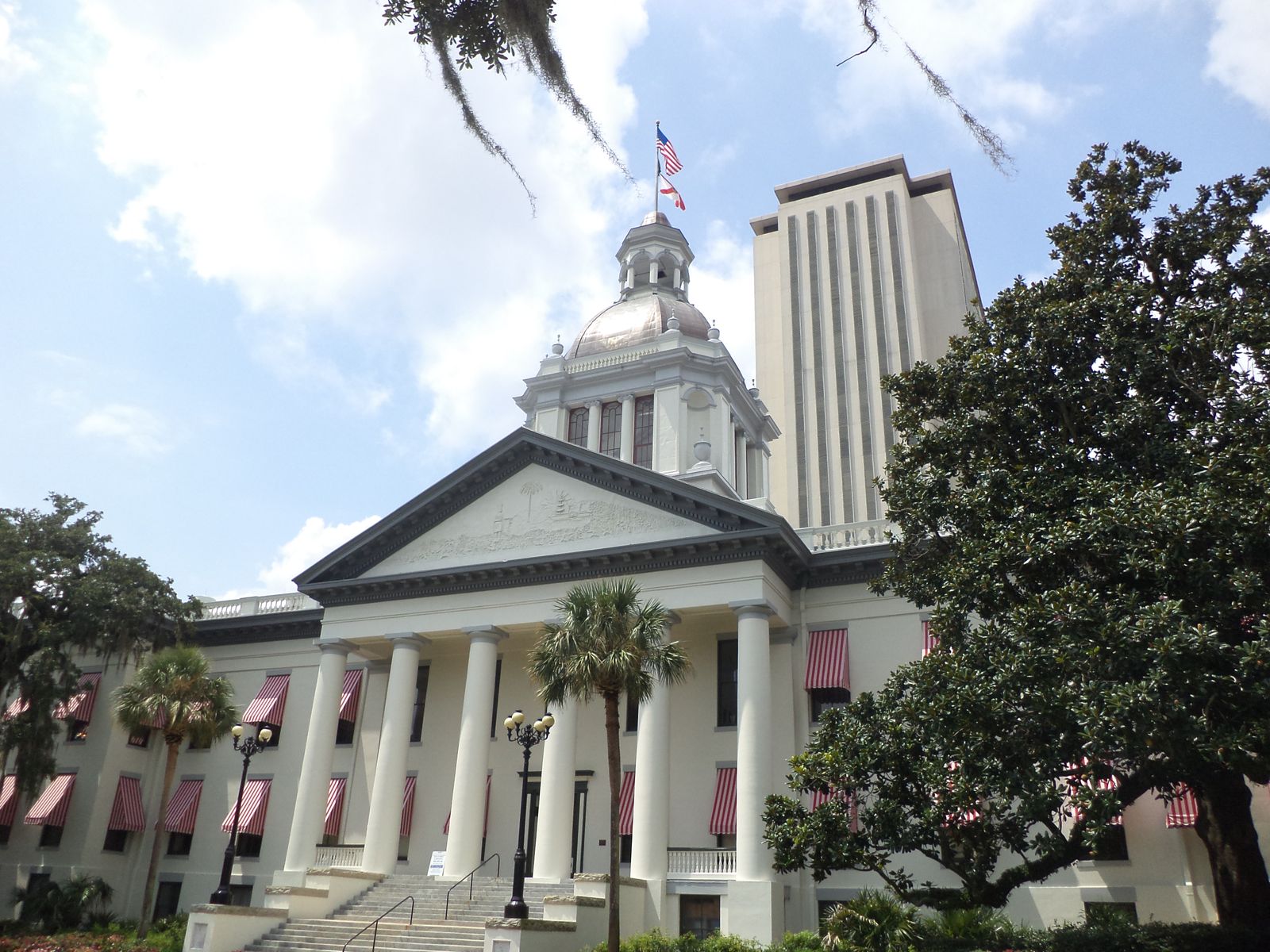
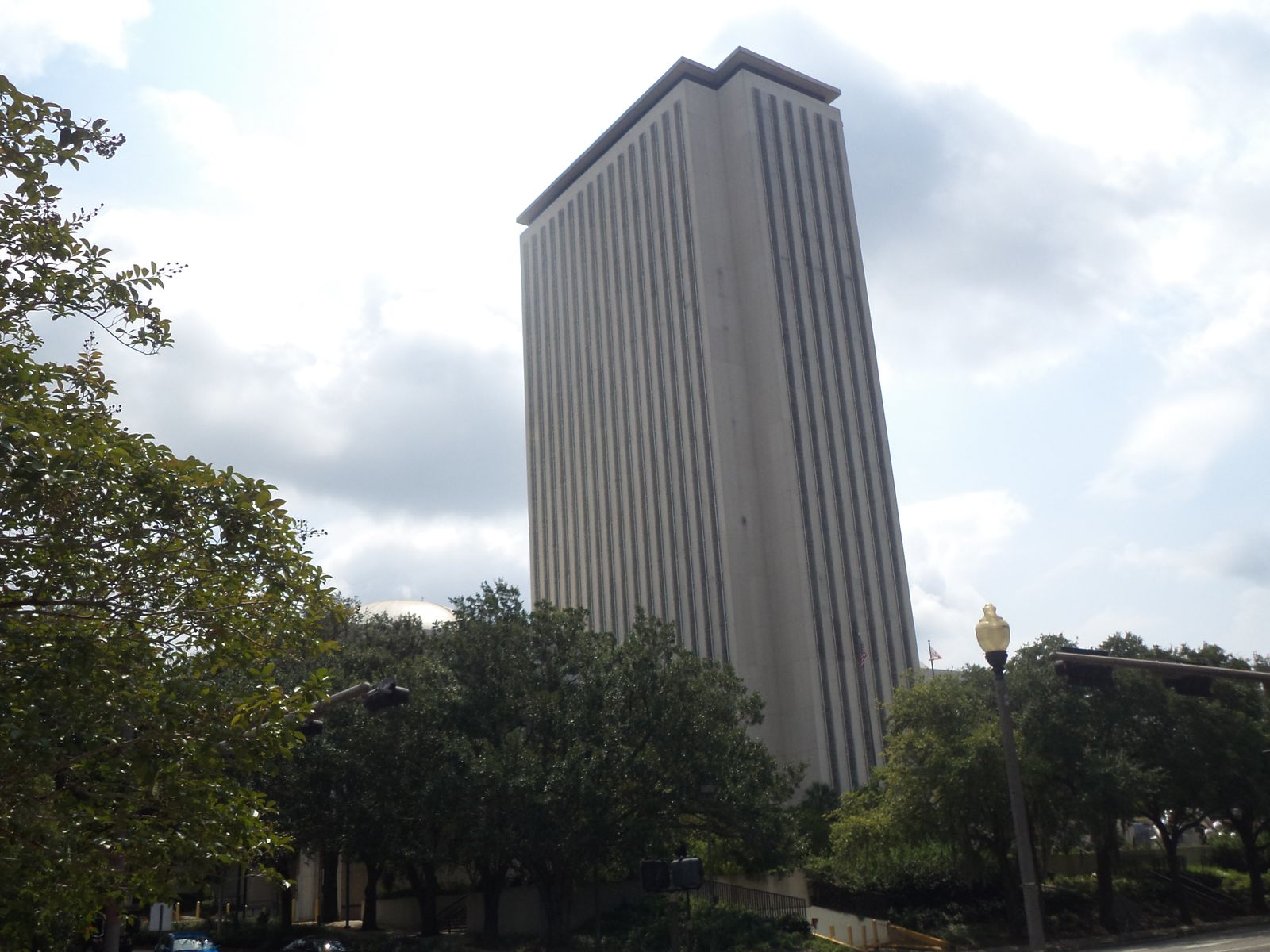
Tallahassee is the state capital and it looks nothing like the rest of Florida. There is no beach in town, there are trees. The oak-tunnel streets, the canopy roads, are the local postcard. Winter actually gets cold, with jacket days and light frost in the morning, and summer is hot and humid with heavy late-afternoon rain. Hurricane season is part of the calendar: the university sends alerts, classes pause, everyone gets organized and life goes on.

It is a student city. With your FSUCard you ride the Seminole Express and any StarMetro city route for free, and the Nite Nole covers the ride home late at night. Students who live off campus stay in CollegeTown, right next to the university, or in Midtown, and Tennessee Street and Gaines Street hold the bars, cafés and restaurants. Weekends are outdoors: clear-water springs near town, white-sand beach less than two hours away by car, markets and galleries at Railroad Square.

The Brazilian community is small, far smaller than in Miami or Orlando, and international life happens mostly inside the university. The local airport is small, and flights to Brazil usually connect through Atlanta, Miami or Charlotte. To cross Florida without a car there is RedCoach, which stops on campus and links Gainesville, Orlando, Tampa and the Miami area.

ItemReference
One-bedroom rent off campus$1,006 / month
Public transportStarMetro city buses: $1.25 a ride, $3 day pass, $38 31-day pass; FSU students ride any regular route free by swiping the FSUCard. On campus the Seminole Express (7 routes: Garnet, Gold, Heritage, Innovation, Osceola, Renegade, Tomahawk) is free, Mon-Fri 7 AM-8 PM; the Nite Nole night bus runs Mon-Sat 8 PM-3 AM in fall and spring. RedCoach intercity buses stop on campus.
Nearest airportTallahassee International Airport (TLH), about 10 km / 15 minutes from campus; domestic flights only (American, Delta, JetBlue, Breeze) - international connections through Atlanta, Charlotte, Miami or Dallas.
Distance to Orlando414 km
Distance to Miami774 km
ClimateHumid subtropical with a real winter by Florida standards: average highs of 92 F (33 C) in July, lows around 40 F (4-5 C) in January with occasional frost, and about 59 inches (1,490 mm) of rain a year, concentrated June-August.
Photos: Michael Rivera · CC BY-SA 3.0 (Wikimedia Commons)

F-1 students may work on campus without extra authorization: up to 20 hours a week (all jobs combined) in fall and spring; more than 20 hours during breaks and summer unless summer is the first or final semester.

Careers

Working during and after the course

The median salary of graduates from this university is $66,924 a year, according to the College Scorecard, a US government public database.

On an F-1 visa you can work up to 20 hours a week on campus during term, and full time during breaks.

CPT allows an off-campus internship when it forms part of your program's curriculum, with university authorisation.

OPT gives 12 months of work authorisation in your field after graduation.

Immigration rules change — verified on 2026-09-08. Confirm with the university's international student office before making any decision based on this page.

Compare

How it compares with other Florida universities

FSU makes sense for anyone who wants the classic American college-town experience: a campus you cross on foot, tradition, sport and a strong cultural life. It does not make sense for anyone dreaming of a beach at the door, internships at multinationals and a large Brazilian community; Miami, Orlando or Tampa deliver more of that. Next to UF, FSU is remembered for the arts and humanities. Next to UCF or USF, it is less of a commuter school and more of a live-on-campus one.

The universities below are the closest to this one in total cost. Compare before deciding: the tuition gap between two of them is usually larger than any merit scholarship.

UniversityTotal cost per yearAverage SATMinimum TOEFL
Florida State University (this page)$42,65913004 (1–6 scale)
Florida Gulf Coast University$44,141112079
Florida Polytechnic University$38,801129061
The University of Tampa$50,12411804 (1–6 scale)

FAQ

Frequently asked questions

How much does it cost to study at Florida State University?

The estimated total — tuition, housing and health insurance — is $42,659 per year before any scholarship. Books, transport and course fees are not included. We prefer that you plan with this number and be surprised for the better.

What English scores does Florida State University require?

TOEFL 4 (1–6 scale) or higher, or Duolingo 125 or higher. Duolingo policies change often, so we confirm the current rule before you apply. If your score is below the minimum, prep closes that gap before the deadline.

Do I need the SAT to get into Florida State University?

Not always for admission, but almost always for merit scholarships. The admitted average is around 1300. Without an SAT score you can be admitted and pay full price; with a competitive score, the same university can cost much less.

How does Florida State University read a Brazilian high-school transcript?

The ENEM plays no part. The university converts the transcript grades to the American 0–4 GPA scale from a sworn translation. Averages between 7 and 8 usually land near 3.0; above 9, near 4.0. The minimum required is 3.0.

When should I apply to Florida State University?

The fall entry deadline is December 1, 2026 (Regular Decision, priority date for scholarships); applications continue until March 1, 2027 as space allows, and spring entry is no first-year admission in spring (summer and fall only). Start 10 to 12 months ahead: transcript translation, English score and proof of funds are the steps that delay applications most.

Can I work while studying at Florida State University?

On an F-1 visa you can work up to 20 hours a week on campus during the term and full time during breaks. After graduation, OPT gives 12 months of work authorization in your field, and STEM majors can request 24 more.

How hard is it to get into Florida State University?

Florida State University admits 24% of applicants. The published minimum GPA for international applicants is 3.0 on the American 0–4 scale — a Brazilian transcript is converted to that scale from a sworn translation. The SAT range and average GPA of admitted students, where the university publishes them, are in the Admission section of this page. Below those marks admission is still possible; what gets harder is merit aid.

What is Florida State University's tuition for international students?

$25,702 a year at the out-of-state rate, which is what a Brazilian pays. With housing, meals and health insurance the estimated total is $42,659 — about R$ 220,120 in Brazilian reais at R$ 5.16 to the dollar. Merit scholarships reduce tuition, not the other items.

Is Florida State University or Florida Gulf Coast University more expensive?

On estimated total cost per year, Florida State University comes to $42,659 and Florida Gulf Coast University to $44,141. The gap between the two is usually larger than any merit scholarship, so compare total cost before comparing scholarships.

Can you study at FSU without a car?

Yes. Your FSUCard gets you free rides on the Seminole Express and on StarMetro city routes, and the Nite Nole brings you home late at night. Students in CollegeTown walk to class, and the campus is built for bikes. A car only matters for weekend trips, and by then someone in your group usually has one.

How does admission to the film school work?

Being admitted to FSU is not enough. The College of Motion Picture Arts has its own application, with a résumé, personal statement, creative material, and recommendation letters, and its deadline closes before the university's general one. Select the film major when you apply to the university and prepare the portfolio months ahead. Confirm the exact checklist for the year on the college's own site.

Is engineering at FSU shared with FAMU?

Yes. The engineering college is shared with Florida A&M and sits in its own building in Innovation Park, away from both main campuses. You apply through one of the two universities, take your early coursework on that campus, and then attend classes alongside everyone else. Your degree comes from the university you entered through, and the bus network covers the trip.

Sources

Where these numbers come from

Every block on this page carries its own verification date. Costs and admission requirements come from the Common Data Set and the official international admissions page. Enrollment, acceptance and graduation figures come from College Navigator, the US Department of Education's public database.

Converted to Brazilian reais at R$ 5.16 to the dollar on 2026-08-15. Exchange rates move; the dollar figures are the reference.

Data verified on 2026-09-08.

Reviewed by Elvis Arias, ICEF-certified education advisor, floridabrazil.org. Independent educational advisory: we are not the Florida-Brazil Linkage Institute or any university, and we never promise scholarship percentages.

Sources: College Scorecard · Common Data Set · College Navigator · Official university site

Apply with us

We are an allied agency of this university: an application handled by us costs you nothing extra, and you get an advisor looking after every step.

Talk to an advisor

Reply within 1 business day. No commitment.