Independent guide to Florida universities for Brazilian and international students — real costs, verified merit scholarships, admission step by step
English · Português

Gainesville, Florida · Public university

University of Florida (UF) for Brazilian students

Tuition, acceptance rate, scholarships with conservative numbers and the admission process step by step — in dollars and Brazilian reais — updated 2026-09-08. Este guia em português →

Tuition/year
$34,620
Total cost/year
$51,993
In reais (R$)
R$ 268,284
Talk to an advisor

Reply within one business day. No obligation.

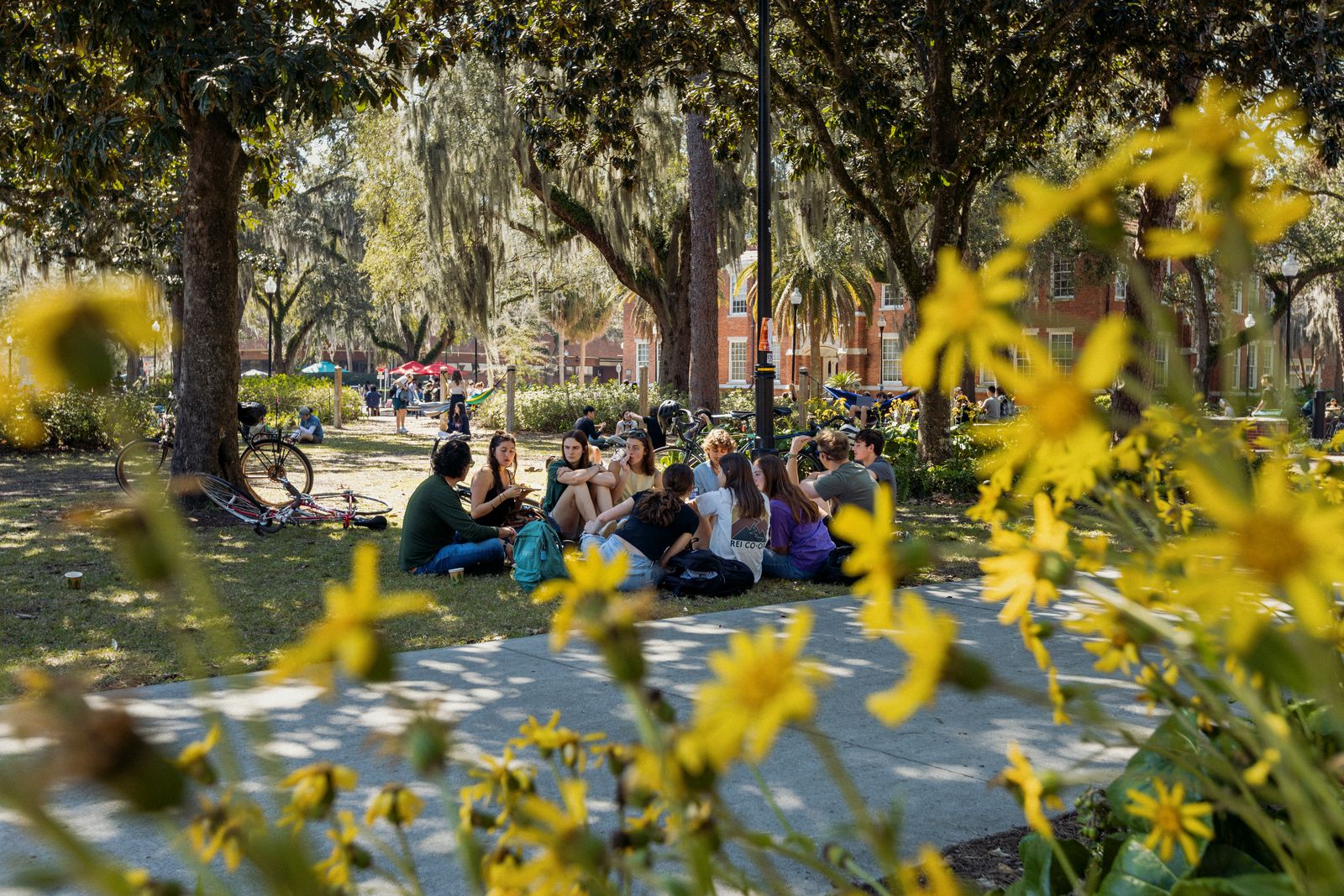
A group of students sitting in a circle on the lawn of the Plaza of the Americas, under live oaks and in front of red-brick buildings, on a sunny day at the University of Florida campus in Gainesville
Photo: Exa Moseley/University of Florida

Profile

University of Florida by the numbers

The figures below come from the US Department of Education's public databases and from University of Florida's own Common Data Set. They let you gauge the size of the institution, the real level of competition and the odds of finishing on time.

Acceptance rate
24%
Undergraduate students
36,573
Total students
56,311
International students
2.9%
Student-faculty ratio
16:1
Graduation rate (6 years)
91%
Founded
1853
Campus setting
Urban, Gainesville, a college town

Admission

University of Florida acceptance rate: how hard it is to get in

University of Florida admits 24% of applicants, according to College Navigator, the US Department of Education's public database.

The middle half of admitted students scored between 1330 and 1490 on the SAT and between 29 and 33 on the ACT. The average high-school GPA of admitted students is 3.9; the published minimum for international applicants is 3.0.

In practice, for a Brazilian applicant: a converted transcript near the average GPA and an SAT inside the range put you in the typical admitted group. Below that, admission is still possible, but merit aid gets harder.

Costs

University of Florida tuition and total cost per year

Tuition at University of Florida for international students is $34,620 a year. With housing, meals and health insurance the estimated total is $51,993 — about R$ 268,284 at R$ 5.16 to the dollar (2026-08-15), verified on 2026-09-08.

ItemAnnual estimate (USD)Approx. in R$
Tuition (out of state)$34,620R$ 178,639
Housing and meals$14,190R$ 73,220
Health insurance$3,183R$ 16,424
Estimated total$51,993R$ 268,284

Estimates for 2026–2027, verified on 2026-09-08. Converted at R$ 5.16 to the dollar (2026-08-15). Books, transport and course fees vary.

Annual cost breakdown: Tuition $34,620, Housing and meals $14,190, Health insurance $3,18366.6%27.3%
Tuition · $34,620Housing and meals · $14,190Health insurance · $3,183

Scholarships

Scholarships at University of Florida: conservative numbers

ScholarshipAmount per yearCriteriaRenewableDeadline
First-year merit scholarships (Presidential / Presidential Gold / Presidential Platinum)$5,000 – $10,000Automatic consideration for all admitted freshmen who apply by November 1; about 10% of admitted freshmen receive a merit award. Based on grades, SAT/ACT, extracurriculars, leadership, service and essay. No stated exclusion of international students.YesNovember 1, 2026 (priority deadline)
Partial out-of-state tuition waivers (Alumni / Sunshine / Gator Nation / UF Distinguished Scholar)$4,000 – $20,000Merit-based; non-Florida residents only, reduces the out-of-state tuition portion. Admitted international freshmen are considered: 'The Office of Admissions will consider admitted international freshmen for one of our out-of-state tuition waivers'. Cancelled if the student gains Florida residency.YesNovember 1, 2026 (priority deadline)
Admissions Honors Scholarship (University Research Scholars Program)$2,000$500 per term (fall/spring) tuition waiver for four years for freshmen selected for the University Research Scholars Program; applies to Florida residents and non-residents alike.YesSelected at admission

Merit scholarships: students have received between 0% and 20% of tuition (conservative estimate, 2026–2027; verified on 2026-09-08). Typical conditions: Highly competitive merit; SAT 1400+ and GPA 3.8+ typical among recipients. The real amount depends on your profile — we never promise percentages.

Our rule is simple: we would rather you plan with conservative numbers and be surprised for the better — never the other way round. Studying in the United States is not free for anyone.

International aid

Scholarships for international students at University of Florida

Only awards the university itself describes are listed, with the requirements it publishes. Where the official page does not say whether international students may apply, the table says "not stated" — ask before counting on the money.

Out-of-State Tuition Waiver / Tuition Scholarship — Alumni, Sunshine, Gator Nation

Amount per year: Alumni: up to $8,000/yr (admissions.ufl.edu) or up to $10,000/yr (sfa.ufl.edu); Sunshine: up to $16,000/yr; Gator Nation: $20,000/yr (4-year totals 32,000/40,000, 64,000, 80,000)

Requirements: Admitted first-year classified as non-Florida resident; merit judged on the same comprehensive admission criteria; no preset minimum; 'Generally, recipients are above the middle fifty percent of our admitted student profile.' About 10% of admitted freshmen get any merit award.

International: Yes

Renewal: Fall/Spring for 4 years; cancelled if residency changes to in-state. Renewal GPA not published.

Deadline: Apply by the 1 November priority deadline (Early Action); notified by mid-March

How to apply: Automatic — no separate application; cannot be stacked with another out-of-state waiver scholarship (e.g., School of Music); can combine with the Admissions Honors Scholarship.

UF Distinguished Scholar Tuition Scholarship

Amount per year: up to $8,000, $6,000 or $4,000 per year (4-year totals $32,000, $24,000, $16,000)

Requirements: Same family of non-resident merit tuition scholarships listed by SFA; criteria unpublished beyond 'selected students'.

International: Not stated

Renewal: Fall/Spring for 4 years; cancelled if residency becomes in-state

Deadline: Not stated (presumably the same 1 Nov priority deadline)

How to apply: Automatic via the admission application

Presidential / Presidential Gold / Presidential Platinum Scholarship

Amount per year: $5,000 / $8,000 / $10,000 per year ($20,000 / $32,000 / $40,000 over 4 years)

Requirements: High-achieving admitted freshmen; the Admissions page does not restrict by residency but the SFA page groups Presidential awards as in-state; stackable with Bright Futures and Benacquisto (Florida residents only).

International: Not stated

Renewal: Fall/Spring for 4 years; criteria unpublished

Deadline: Apply by 1 November; notified by mid-March

How to apply: Automatic, no separate form

Admissions Honors Scholarship (University Research Scholars Program)

Amount per year: $2,000 residential tuition waiver ($500 waived each fall and spring term)

Requirements: Offered to students invited to the University Research Scholars Program

International: Yes

Renewal: $500 per fall and spring term (4 terms)

Deadline: No separate application

How to apply: Automatic; stacks with Presidential and Out-of-State Tuition Waivers

John V. Lombardi Scholarship

Amount per year: Four-year scholarship plus four fully funded summer enrichment experiences (dollar value not published)

Requirements: Admitted to the Honors Program through Early Decision or Early Action; exceptional curiosity, creativity, civic responsibility, leadership

International: Not stated

Renewal: 4 years; criteria unpublished

Deadline: Apply ED (15 Oct) or EA (1 Nov) to Honors; invited afterwards

How to apply: By invitation after Honors admission; separate application

Stamps Scholarship (Stamps Scholars Program)

Amount per year: Four-year scholarship with summer experiences; SFA page cites a $6,000 annual stipend and four funded summer trips

Requirements: Admitted to the Honors Program through Early Decision or Early Action

International: Not stated

Renewal: 4 years

Deadline: ED 15 Oct or EA 1 Nov

How to apply: By invitation; separate application

Florida Linkage Institutes (ended) — out-of-state tuition waiver (ENCERRADA)

Amount per year: Was in-state classification for tuition (up to 25 FTE per country). ENDED: HB 905 (Foreign Interference Restriction Act), signed 8 May 2026, shut the Linkage Institutes down.

Requirements: No longer applies. Brazil had the Florida-Brazil Linkage Institute (FBLI) at UF; the UFIC page still describes the program as active while the FBLI waiver pages now 404.

International: No

Renewal: n/a

Deadline: n/a

How to apply: n/a — program ended

Need-based aid

There is no UF need-based aid for students on F-1 or J-1 visas; Student Financial Affairs says so in as many words. The international office warns that funding for international students is scarce and concentrated at graduate level. For first-years, what exists is the small set of out-of-state tuition waivers, given to roughly one in ten admits.

Scores

What University of Florida asks of Brazilian applicants

RequirementReference
SAT (25th–75th percentile)1330 – 1490
ACT (25th–75th percentile)29 – 33
Average GPA of admitted students3.9
Minimum GPA3.0
SAT/ACT policySAT or ACT required

UF requires the TOEFL or IELTS from non-native English speakers, but the Gainesville campus publishes no minimum score: the 80 and 6.0 figures found online belong to UF Online, a separate program. Duolingo, PTE, TOEFL Essentials, Cambridge and iTEP do not appear on the admissions pages. Confirm the expected score with first-year admissions before booking a test. Verified on 2026-09-08.

SAT range of admitted students: 1330 at the 25th percentile and 1490 at the 75th13301490average 1400
Half of admitted students fall inside the highlighted range. Landing below it does not rule you out, but it weighs on merit aid.

How your Brazilian transcript is read

The ENEM plays no part in the review. The university converts your secondary-school grades onto the American 0 to 4 scale, and that number is what appears as your GPA. Averages between 7 and 8 usually land near 3.0; above 9, near 4.0. The conversion is done either by the university itself or by a credential evaluation service, and the transcript has to be translated by a sworn translator.

Why the score is worth money

University of Florida's merit scholarship is not a single figure. It is a range, $5,000 to $20,000 per year. Where you land inside it depends on your transcript, the rigour of the courses you took and your SAT or ACT score when you choose to submit one.

Merit scholarship range: $5,000 to $20,000 per year$5,000$20,000floorceiling

The distance between floor and ceiling is $15,000 per year. Over a four-year degree, $60,000, or about R$ 309,600. That is the size of the difference a better score can make, and it is why the test is worth sitting even when it is optional.

The university superscores: it takes your best score in each section across every test date you submit. Retaking the test, in practice, can only help.

Tests

Admission tests at University of Florida

Admitted-student profile according to U.S. News & World Report

U.S. News publishes the range covering the middle half of admitted students, not an average. Use the range as a gauge of competitiveness (2026 data).

ItemReference
SAT (25th–75th percentile)1320 – 1500
ACT (25th–75th percentile)30 – 34
Average high-school GPA3.9
Acceptance rate24%

Source: U.S. News & World Report

Accepted English tests and minimum scores

TestMinimum scoreNote
TOEFL iBTrequired; no minimum published for the campusUF requires the TOEFL or IELTS from non-native speakers without publishing a score. The 80 and 6.0 figures belong to UF Online.
IELTS Academicrequired; no minimum published for the campusUF requires the TOEFL or IELTS from non-native speakers without publishing a score. The 80 and 6.0 figures belong to UF Online.
TOEFL Essentialsnot listedNot mentioned on admissions.ufl.edu/apply/freshman/international, the Catalog, or UF Online.
Duolingo English Testnot listedNot mentioned on any UF first-year admissions page checked.
PTE Academicnot listedNot mentioned on any page checked.
Cambridge English (B2 First / C1 Advanced / C2 Proficiency)not listedNo Cambridge exam or Cambridge English Scale score appears on the pages checked.
iTEPnot listedNot mentioned on the pages checked.
ELSnot listedNot mentioned on the pages checked.
Waiver via SAT/ACT (English section)not published for the campusUF Online sentence: 'The TOEFL or IELTS testing requirement may be waived for eligible applicants who provide official SAT or ACT scores taken within 5 years of their first intended term of enrollment with UF Online.' No section minimum is published. The campus page only requires SAT/ACT/CLT for everyone and says nothing about an English waiver.
Waiver for English-medium schooling / exempt countrynot published for the campusUF Online: 'Completed one full time academic year in a high school program or a degree-seeking program at a college/university where English is the language of instruction.' Brazil is not on the exempt-country list (it begins Anguilla, Antigua and Barbuda, Australia, Bahamas, Barbados). The campus page publishes no waiver rule.

Cambridge English (B2 First, C1 Advanced, C2 Proficiency) appears in the table when the university accepts it. If it is absent, the official page does not list it — do not send a Cambridge certificate in place of the TOEFL without confirming with admissions.

SAT and ACT

The SAT, ACT or CLT is required of every first-year applicant, international included, under the state system rule; UF accepts self-reported scores on the application and superscores each section. There is no published floor, but the admitted profile is high: GPA 4.5 to 4.7 and SAT 1420 to 1520 in the latest class, per UF itself. Merit scholarships weigh the score and use the November 1 Early Action date as priority. Verified on 2026-09-08.

Majors

All majors at University of Florida

There are 125 majors, grouped by the school that offers them, each with the degree code the application form uses. Search by name, or filter by school or STEM.

The 42 majors marked STEM qualify for an extra 24 months of work authorisation on top of OPT — up to 36 months working in the United States after graduation. If you plan to stay, that designation matters more than the name of the degree.

125 majors

College of Agricultural and Life Sciences20

Biology – CALS
STEM
Botany – CALS
STEM
Plant Science
STEM
Food Science
STEM
Family, Youth and Community Sciences
Nutritional Sciences
STEM
Soil, Water, and Ecosystem Sciences
STEM
Marine Sciences – CALS
STEM
Natural Resource Conservation
STEM
Dietetics
Wildlife Ecology and Conservation
STEM
Food and Resource Economics
Agricultural Education and Communication
Entomology and Nematology
STEM
Interdisciplinary Studies – Environmental Management in Agriculture and Natural Resources
Geomatics
Agricultural Operations Management
Microbiology and Cell Science – CALS
STEM
Forest Resources and Conservation
STEM
Animal Sciences
STEM

College of Design, Construction and Planning5

Architecture
Landscape Architecture – 4-​Year Professional Program
Urban Sciences and Planning
Interior Design
Sustainability and the Built Environment

College of Education3

Education Sciences
Elementary Education – Grades K-​6
Early Childhood Education – Age 3 -​ Grade 3

College of Health and Human Performance4

Health Education and Behavior
Applied Physiology and Kinesiology
Sport Management
Tourism, Hospitality and Event Management

College of Journalism and Communications4

Journalism
Media Production, Management, and Technology
Advertising
Public Relations

College of Liberal Arts and Sciences48

German
Anthropology
Astronomy and Astrophysics
STEM
Biology – CLAS
STEM
Botany – CLAS
STEM
Chinese
Computer Science – CLAS
STEM
Data Science
STEM
Political Science
Marine Sciences – CLAS
STEM
Criminology
Dual Languages
Economics
Spanish
Spanish and Portuguese
Statistics
STEM
African American Studies
Classical Studies
Women's Studies
Sustainability Studies
STEM
French and Francophone Studies
Interdisciplinary Studies – CLAS
International Studies
Jewish Studies
Philosophy
Physics
STEM
Geography
Geology
STEM
Hebrew
History
Italian
Japanese
English
Linguistics
African Languages
Foreign Languages and Literatures
Hispanic and Latin American Languages, Literatures and Linguistics
Mathematics
STEM
Meteorology
STEM
Microbiology and Cell Science – CLAS
STEM
Portuguese
Psychology
Chemistry – Biochemistry
STEM
Religion
Russian
Sociology
Zoology
STEM
Arabic

College of Nursing1

Nursing

College of Public Health and Health Professions3

Health Science
Communication Sciences and Disorders
Public Health

College of the Arts14

Digital Arts and Sciences – Bachelor of Arts
Art – BA
Art – BFA
Dance – Bachelor of Arts
Dance – Bachelor of Fine Arts
Graphic Design
Music Education
Art History
Theatre Performance
Music – Bachelor of Arts
Music – Bachelor of Music
Music Business and Entrepreneurship
Theatre Production
Theatre

Fisher School of Accounting1

Accounting

Heavener School of Business5

Business Administration – General Studies – BABA
Finance
Management
Marketing
Information Systems

Herbert Wertheim College of Engineering15

Digital Arts and Sciences – Bachelor of Science
Computer Science – Herbert Wertheim College of Engineering
STEM
Materials Science and Engineering
STEM
Aerospace Engineering
STEM
Environmental Engineering
STEM
Biological Engineering
STEM
Biomedical Engineering
STEM
Civil Engineering
STEM
Computer Engineering
STEM
Industrialized Construction Engineering
Electrical Engineering
STEM
Industrial and Systems Engineering
STEM
Mechanical Engineering
STEM
Nuclear Engineering
STEM
Chemical Engineering
STEM

M.E. Rinker, Sr. School of Construction Management1

Construction Management

School of Natural Resources and Environment1

Environmental Science
STEM

Graduate

Graduate study at University of Florida

There are 180 programs open to international students, 65 of them STEM-designated.

180 programs

ProgramSTEMGRE or GMAT requiredIntake
College of Agricultural and Life Sciences22
Agricultural and Biological Engineering, M.E.STEM——
Agricultural and Biological Engineering, M.S.STEM——
Agricultural Education and Communication, M.S.——
Agronomy, M.S.STEM——
Animal Sciences, M.S.STEM——
Entomology and Nematology, M.S.STEM——
Family, Youth and Community Sciences, M.S.——
Fisheries and Aquatic Sciences, M.F.A.S.——
Fisheries and Aquatic Sciences, M.S.——
Food and Resource Economics, M.AB.——
Food and Resource Economics, M.S.——
Food Science and Human Nutrition, M.S.STEM——
Forest Resources and Conservation, M.F.R.C.STEM——
Forest Resources and Conservation, M.S.STEM——
Genetics and Genomics, M.S.STEM——
Horticultural Sciences, M.S.STEM——
Interdisciplinary Ecology, M.S.STEM——
Microbiology and Cell Science, M.S.STEM——
Plant Pathology, M.S.STEM——
Soil and Water Sciences, M.S.STEM——
Soil, Water, and Ecosystem Sciences, M.S.STEM——
Wildlife Ecology and Conservation, M.S.STEM——
College of Dentistry1
Dental Sciences, M.S.——
College of Design, Construction and Planning10
Architecture, M.Arch.——
Architecture, M.S.A.S.——
Construction Management, M.C.M——
Construction Management, M.S.C.M——
Historic Preservation, M.H.P.——
Integrated Sustainable Development, M.I.S.D.——
Interior Design, M.I.D.——
Landscape Architecture, M.L.A.STEM——
Urban Analytics, M.S.——
Urban and Regional Planning, M.U.R.P——
College of Education32
Curriculum and Instruction, M.A.E.——
Curriculum and Instruction, M.Ed.——
Early Childhood Education, M.A.E.——
Early Childhood Education, M.Ed.——
Educational Leadership, M.A.E.——
Educational Leadership, M.Ed.——
Elementary Education, M.A.E.——
Elementary Education, M.Ed.——
English Education, M.A.E.——
English Education, M.Ed.——
Marriage and Family Counseling, M.A.E.——
Marriage and Family Counseling, M.Ed.——
Mathematics Education, M.A.E.——
Mental Health Counseling, M.A.E.——
Mental Health Counseling, M.Ed.——
Program Evaluation in Educational Environments, M.A.E.——
Reading Education, M.A.E.——
Reading Education, M.Ed.——
Research and Evaluation Methodology, M.A.E.——
Research and Evaluation Methodology, M.Ed.——
School Counseling and Guidance, M.A.E.——
School Counseling and Guidance, M.Ed.——
School Psychology, M.A.E.——
School Psychology, M.Ed.——
Science Education, M.A.E.——
Science Education, M.Ed.——
Social Studies Education, M.A.E.——
Social Studies Education, M.Ed.——
Special Education, M.A.E.——
Special Education, M.Ed.——
Student Personnel in Higher Education, M.A.E.——
Student Personnel in Higher Education, M.Ed.——
College of Health and Human Performance3
Applied Physiology and Kinesiology, M.S.STEM——
Sport Management, M.S.——
Tourism and Recreation Management, M.S.——
College of Journalism and Communications1
Mass Communication, M.A.M.C.——
College of Liberal Arts and Sciences44
Anthropology, M.A.——
Anthropology, M.A.T.——
Archaeology, M.S.——
Astronomy, M.S.STEM——
Astronomy, M.S.T.STEM——
Botany, M.S.STEM——
Botany, M.S.T.STEM——
Chemistry, M.S.STEM——
Chemistry, M.S.T.STEM——
Creative Writing, M.F.A.——
Criminology, Law, and Society, M.A.——
Economics, M.A.——
English, M.A.——
French and Francophone Studies, M.A.——
French and Francophone Studies, M.A.T.——
Geography, M.A.——
Geography, M.S.——
Geology, M.S.STEM——
Geology, M.S.T.STEM——
German, M.A.——
History, M.A.——
Latin American Studies, M.A.——
Latin, M.A.——
Latin, M.L.——
Linguistics, M.A.——
Mathematics, M.A.T.STEM——
Mathematics, M.S.STEM——
Mathematics, M.S.T.STEM——
Philosophy, M.A.——
Physics, M.S.STEM——
Physics, M.S.T.STEM——
Political Science - International Relations, M.A.——
Political Science, M.A.——
Psychology, M.A.——
Psychology, M.S.——
Sociology, M.A.——
Spanish, M.A.——
Spanish, M.A.T.——
Statistics, M.S.Stat.STEM——
Statistics, M.Stat.STEM——
Sustainable Development Practice, M.D.P.——
Women's Studies, M.A.——
Zoology, M.S.STEM——
Zoology, M.S.T.STEM——
College of Medicine4
Anatomical Sciences Education, M.S.——
Artificial Intelligence in Biomedical and Health Sciences, M.S.——
Biochemistry and Molecular Biology, M.S.STEM——
Medical Sciences, M.S.——
College of Pharmacy1
Pharmaceutical Sciences, M.S.P.STEM——
College of Public Health and Health Professions6
Biostatistics, M.S.STEM——
Communication Sciences and Disorders, M.A.——
Environmental and Global Health, M.H.S.——
Epidemiology, M.S.STEM——
Health Administration, M.H.A.——
Public Health, M.P.H.——
College of Veterinary Medicine3
Comparative Biomedical Sciences, M.S.——
Preventive Veterinary Medicine, M.P.V.M.——
Veterinary Medical Sciences, M.S.——
College of the Arts12
Art Education, M.A.——
Art History, M.A.——
Art, M.A.——
Art, M.F.A.——
Arts in Medicine, M.A.——
Design and Visual Communications, M.F.A.——
Digital Arts and Sciences, M.A.——
Digital Arts and Sciences, M.S.——
Museology, M.A.——
Music Education, M.M.——
Music, M.M.——
Theatre, M.F.A.——
Hamilton School for Classical and Civic Education2
History of Ideas, M.A.——
War, Statecraft and Strategy, M.A.——
Herbert Wertheim College of Engineering27
Aerospace Engineering, M.S.STEM——
Applied Data Science, M.S.STEM——
Artificial Intelligence Systems, M.S.STEM——
Biomedical Engineering, M.E.STEM——
Biomedical Engineering, M.S.STEM——
Chemical Engineering, M.E.STEM——
Chemical Engineering, M.S.STEM——
Civil Engineering, M.E.STEM——
Civil Engineering, M.S.STEM——
Coastal and Oceanographic Engineering, M.E.STEM——
Coastal and Oceanographic Engineering, M.S.STEM——
Computer Engineering, M.E.STEM——
Computer Engineering, M.S.STEM——
Computer Science, M.S.STEM——
Electrical and Computer Engineering, M.E.STEM——
Electrical and Computer Engineering, M.S.STEM——
Engineering Education, M.S.——
Engineering Management, M.S.——
Environmental Engineering Sciences, M.E.STEM——
Environmental Engineering Sciences, M.S.STEM——
Industrial and Systems Engineering, M.E.STEM——
Industrial and Systems Engineering, M.S.STEM——
Materials Science and Engineering, M.E.STEM——
Materials Science and Engineering, M.S.STEM——
Mechanical Engineering, M.S.STEM——
Nuclear Engineering Sciences, M.E.STEM——
Nuclear Engineering Sciences, M.S.STEM——
Warrington College of Business12
Accounting, M.Acc.——
Business Administration, M.A.——
Business Administration, M.B.A.——
Business Administration, M.S.——
Business Analytics, M.S.B.A.STEM——
Entrepreneurship, M.S.E——
Finance and Technology, M.S.——
Finance, M.S.——
Information Systems and Operations Management, M.S.I.S.O.M——
International Business, M.I.B——
Management, M.S.——
Real Estate, M.S.——
FSpSuF = fall (August) · Sp = spring (January) · Su = summer (May)No = GRE/GMAT waived · Yes = required · — = confirm with the program

The STEM designation matters more at master's level than at undergraduate. It allows a request for 24 extra months of OPT on top of the initial 12, which means up to three years working in the United States off a one- or two-year degree.

What the graduate programs require

RequirementReference
Minimum TOEFL (1–6 band scale, in force since 21 January 2026)4.5 · tests taken before 21 January 2026: 80
Minimum IELTS6.5
Application fee$30
Minimum full-time load9 credit hours per semester

Graduate documents

Beyond a transcript from every institution you attended, with certified translation, the application asks for a personal statement in English, a professional resume and two reference forms from people who can speak to your academic and professional background. A course-by-course credential evaluation is strongly recommended.

Graduate deadlines

IntakeApplication complete by
Fall intakevaries by program; the department must request the I-20 by May 15
Spring intakevaries by program; I-20 request by October 1

Deadlines

When to do what

IntakeApplication deadlineScholarship deadline
Fall intakeJanuary 15, 2027 (Regular Decision); Early Decision by October 15 and Early Action by November 1, 2026November 1, 2026 (Early Action; priority date for merit scholarships)
Spring intakeno first-year admission in spring

A 12-month timeline

  1. 12 to 10 months out — choose the universities and check whether your English score already clears the minimum. If it does not, this is where prep comes in.
  2. 10 to 8 months out — translate the transcript and request the credential evaluation where required. It takes 2 to 6 weeks and is the single biggest source of delay.
  3. 8 to 6 months out — submit the application and pay the $30 fee.
  4. 6 to 4 months out — acceptance letter and proof of funds. The university only issues the I-20 after approving the bank statement.
  5. 4 to 3 months out — pay the SEVIS fee, complete the DS-160 and book the consular interview. Confirm the fee amounts on the official site: they change.
  6. 3 to 1 month out — consular interview, visa in the passport, flights, insurance and housing.

Documents

What you need to gather

The order below is the order in which University of Florida asks for each item. Start with the first two: they depend on third parties and they are what stalls the process.

  1. Complete secondary-school transcript, translated into English by a sworn translator.
  2. Credential evaluation by a recognised service (WES, SpanTran, ECE). It takes 2 to 6 weeks — start here.
  3. SAT or ACT score, where required and whenever you want to compete for merit aid.
  4. Letter of recommendation from a teacher or coordinator.
  5. Personal statement in English.
  6. Proof of funds — a bank statement showing funds for the first year. It is the document that releases the I-20, and the one most often sent back for correction.
  7. Valid passport and the $30 application fee.

Campus

Campus life and housing

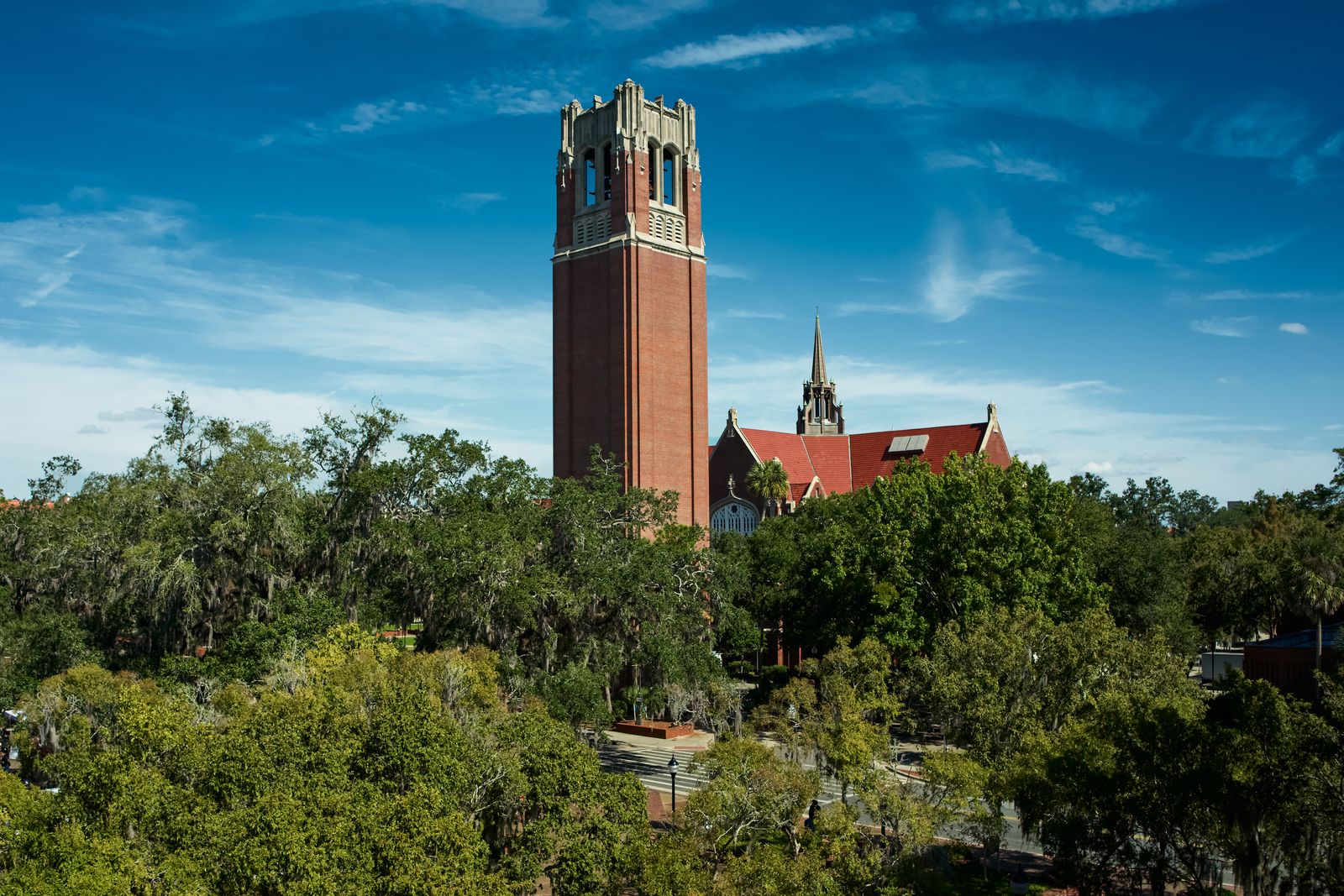
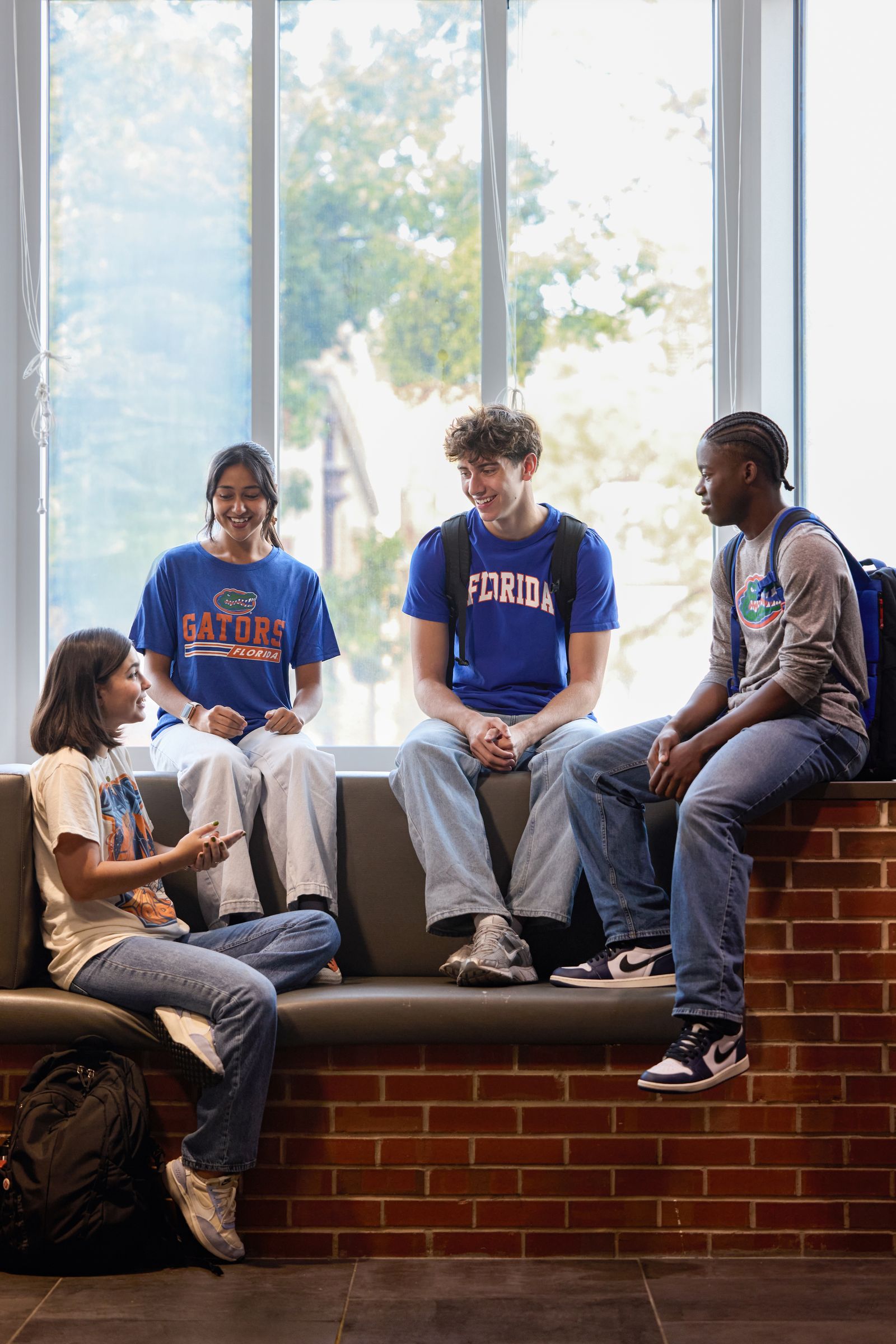
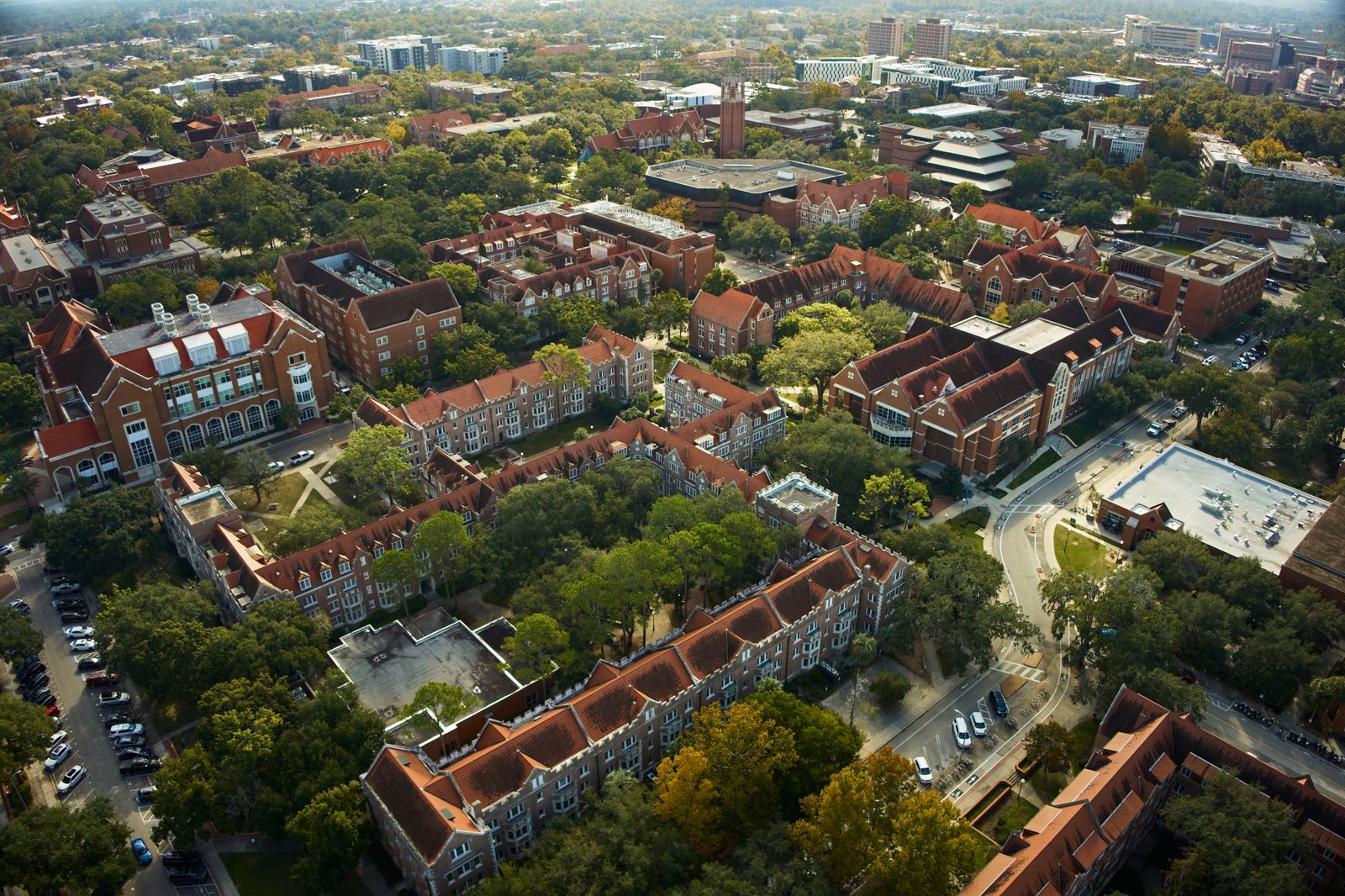
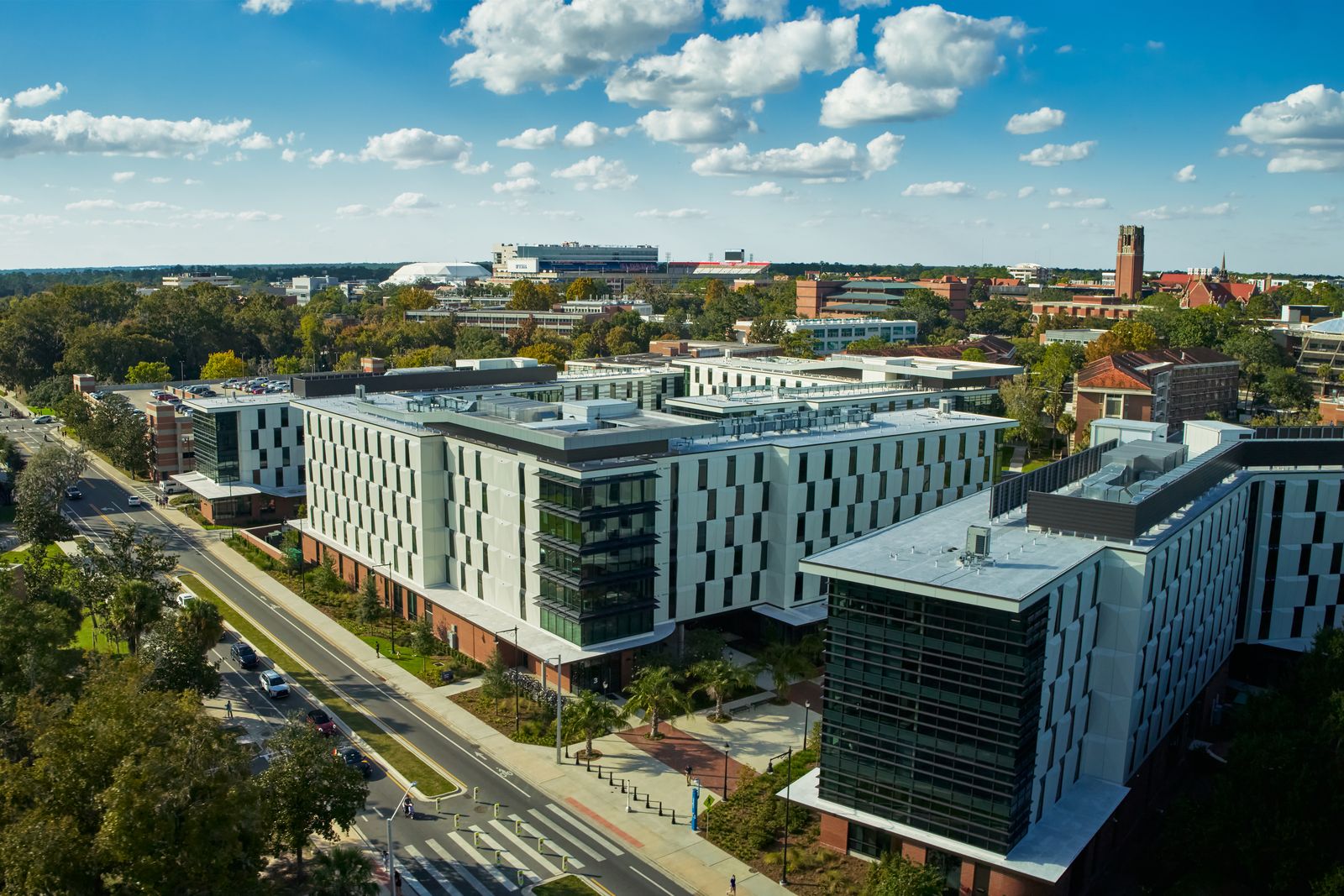
The UF campus covers a lot of ground, but the core where you spend your day is walkable. Red brick buildings, covered walkways, deep oak shade. Century Tower plays its carillon between classes and works as a landmark while you are still getting lost. Turlington Plaza is where everyone passes through. Marston Science Library and Library West fill up during exams and turn into second homes.

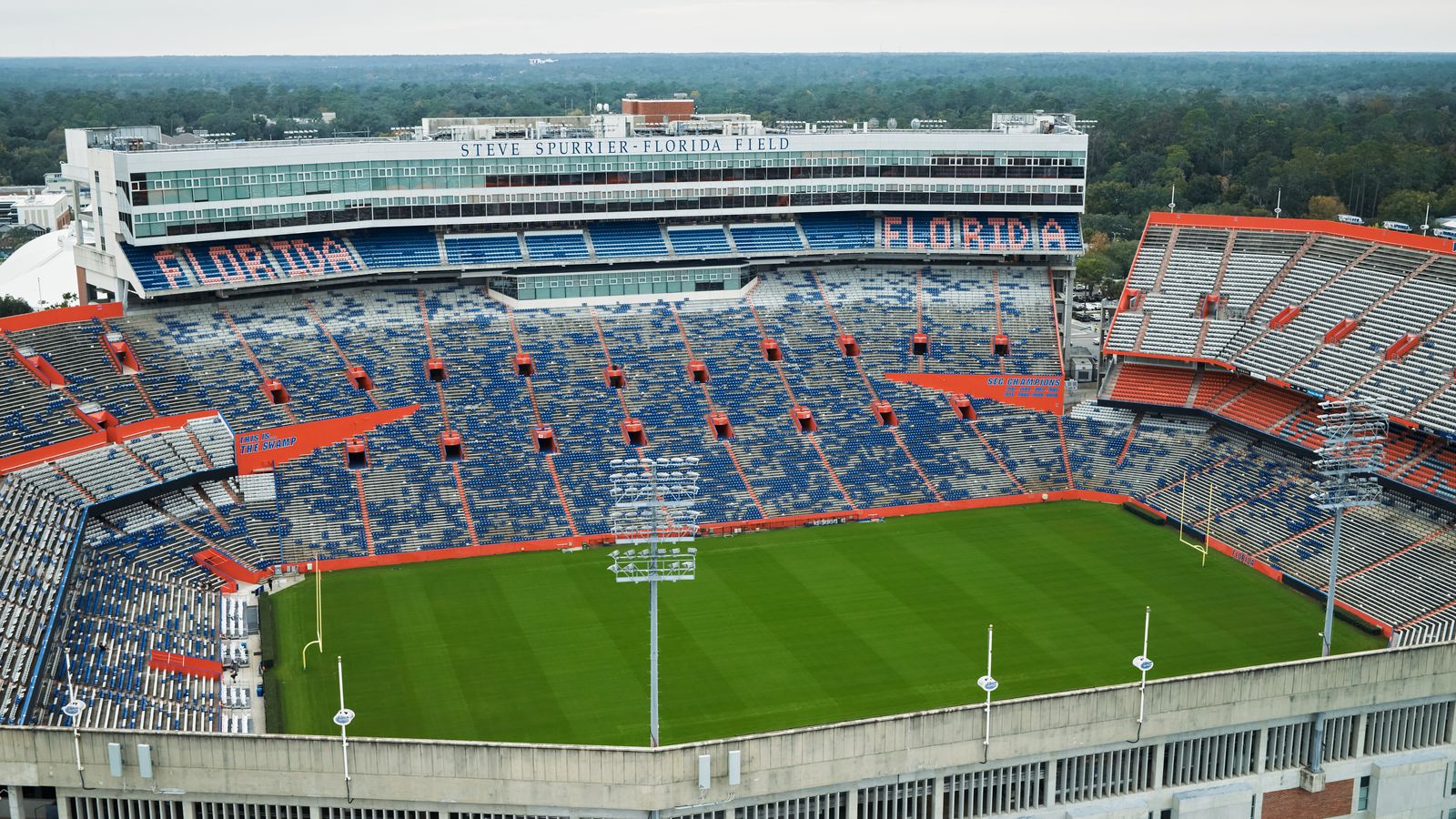
Lake Alice, inside campus, has real alligators and bat houses that empty out at dusk. The Reitz Union pulls together food, study space and club meetings. In the fall, football Saturdays at Ben Hill Griffin Stadium stop the city: orange and blue everywhere, people settled in from early morning. What surprises most international students in the first week is dinner at six, the freezing air conditioning and how much of the campus moves by bicycle.

First-year students are not required to live on campus, but rooms run out. You submit the housing application right after your admission letter, choose a room type and, in most cases, share with one person. Pack light. Bedding, a towel, and the rest you buy locally in the first weekend.

Photos: James Sullivan/University of Florida, Jesse Burke/University of Florida, University of Florida

There is no requirement to live on campus in the first year, which opens up sharing an apartment off campus — usually cheaper, with transport left to solve.

Photos: James Sullivan/University of Florida

City

Living in Gainesville

Gainesville is a college town in the literal sense. Without UF it would be something else entirely. That keeps everything close and everything student-shaped. Midtown sits right against campus, north of University Avenue, and is where the apartment buildings full of first-years are. Downtown, minutes away, has bars, Bo Diddley Plaza with open-air music, and Depot Park with a bike trail that cuts across the city.

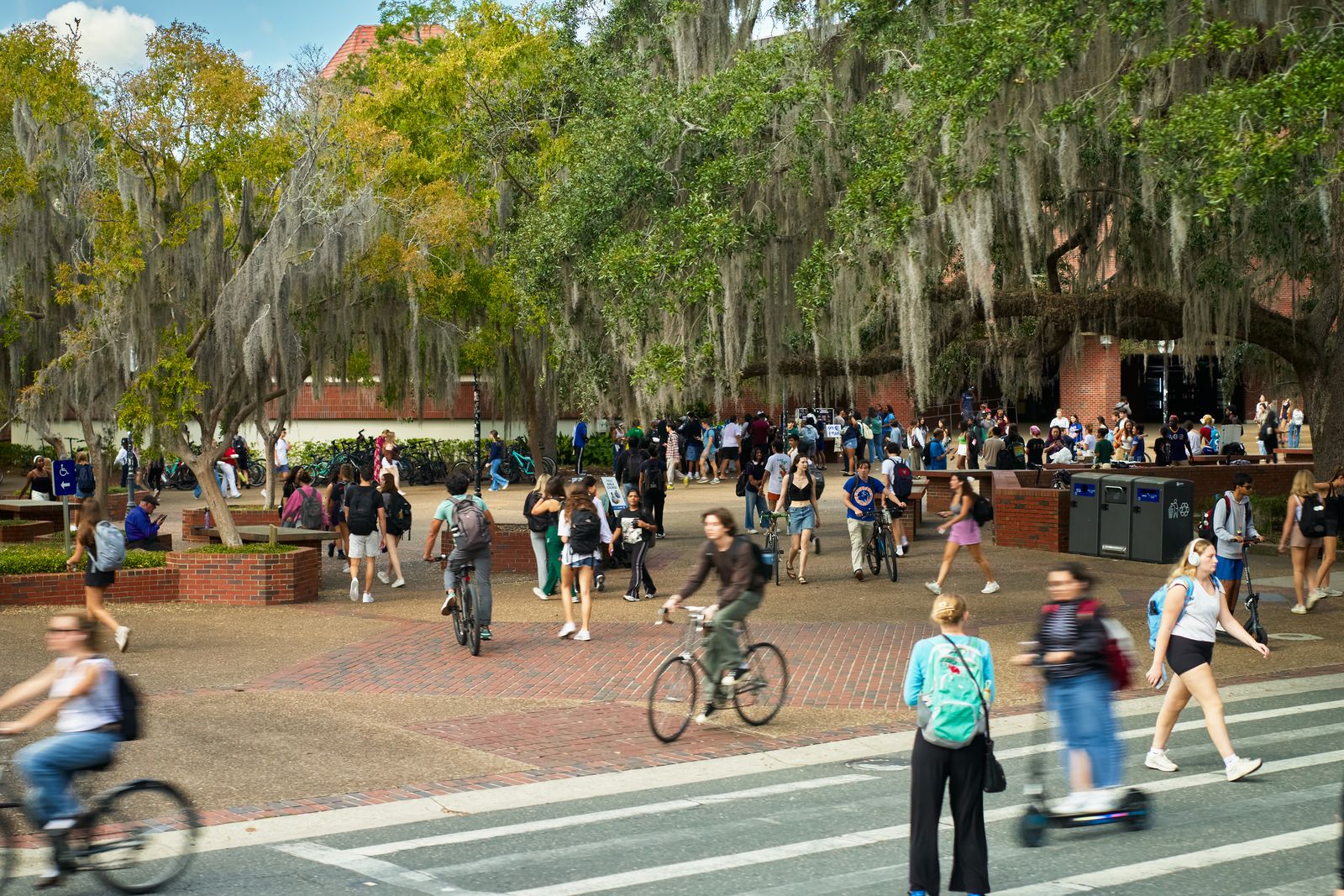
Life without a car works here. The RTS bus is free with the Gator 1 student card, and nearly every rental complex sits on a route. The city is flat and full of bike lanes, so a bicycle covers the rest. At night there is SNAP, the university's free ride service for students leaving the library late. A car only matters for weekend trips.

Heat is humid and constant from March to October, with heavy late-afternoon rain in summer that passes in half an hour. Hurricane season is routine: the university announces, closes for a day or two, reopens. Gainesville sits inland, away from the coast, which helps. On weekends students drive out to the clear freshwater springs around the city or to Paynes Prairie, where bison and wild horses roam. The international community is small and revolves around the university, mostly graduate programs and the Latin American studies center.

ItemReference
One-bedroom rent off campus$1,099 / month
Public transportRTS (Gainesville city bus): UF students ride every regular route free with the Gator 1 ID card or app - 'pre-paid unlimited access to all RTS fixed-route services. No fee required'. Standard fare $1.50 per ride, $3.00 24-hour pass, $35 monthly. Many routes run through campus and to student apartment complexes; no rail or metro. Bikes and scooters are common; unlike Florida's big cities, a car is optional in Gainesville.
Nearest airportGainesville Regional Airport (GNV), about 5 km (3 miles) northeast of downtown: daily American flights to Charlotte, Dallas/Fort Worth and Miami and Delta to Atlanta; a record 578,000 passengers in 2024, domestic only. From Brazil the usual route is to fly into Orlando (MCO, ~197 km / 2h25 drive from UF) or Jacksonville (JAX, ~134 km / 1h55) and continue by car or bus.
Distance to Orlando181 km
Distance to Miami541 km
ClimateHumid subtropical (Köppen Cfa): January mean 12.7 °C, July mean 27.4 °C; hot, wet summers (most of the 1,230 mm of rain falls June-September) and mild winters that are cooler than South Florida - about 15 nights a year at or below freezing and a hard freeze every few years. Bring a jacket for December-February.
Photos: Hannah Pietrick/University of Florida, University of Florida

F-1 students may work on campus up to 20 hours per week while classes are in session (all on-campus jobs combined, no extra authorization) and more than 20 hours during official breaks (Thanksgiving, winter, spring break, summer). Off-campus work only through CPT/OPT authorized by the UF International Center.

Careers

Working during and after the course

The median salary of graduates from this university is $71,588 a year, according to the College Scorecard, a US government public database.

On an F-1 visa you can work up to 20 hours a week on campus during term, and full time during breaks.

CPT allows an off-campus internship when it forms part of your program's curriculum, with university authorisation.

OPT gives 12 months of work authorisation in your field after graduation.

Immigration rules change — verified on 2026-09-08. Confirm with the university's international student office before making any decision based on this page.

Compare

How it compares with other Florida universities

UF is a research university with demanding admissions, and that shows up in the pace of classes and the profile of the cohort. Choose it if you want the classic American campus experience, with football, fraternity life and a whole city organized around the university. If you want the beach nearby, a big city and an international airport at the door, Miami or Boca Raton make more sense. If you want a large campus and the same energy without the same competition at the gate, look at UCF.

The universities below are the closest to this one in total cost. Compare before deciding: the tuition gap between two of them is usually larger than any merit scholarship.

UniversityTotal cost per yearAverage SATMinimum TOEFL
University of Florida (this page)$51,9931400
New College of Florida$47,00512004 (1–6 scale)
Florida Gulf Coast University$44,141112079
The University of Tampa$50,12411804 (1–6 scale)

FAQ

Frequently asked questions

How much does it cost to study at University of Florida?

The estimated total — tuition, housing and health insurance — is $51,993 per year before any scholarship. Books, transport and course fees are not included. We prefer that you plan with this number and be surprised for the better.

Do I need the SAT to get into University of Florida?

Not always for admission, but almost always for merit scholarships. The admitted average is around 1400. Without an SAT score you can be admitted and pay full price; with a competitive score, the same university can cost much less.

How does University of Florida read a Brazilian high-school transcript?

The ENEM plays no part. The university converts the transcript grades to the American 0–4 GPA scale from a sworn translation. Averages between 7 and 8 usually land near 3.0; above 9, near 4.0. The minimum required is 3.0.

When should I apply to University of Florida?

The fall entry deadline is January 15, 2027 (Regular Decision); Early Decision by October 15 and Early Action by November 1, 2026, and spring entry is no first-year admission in spring. Start 10 to 12 months ahead: transcript translation, English score and proof of funds are the steps that delay applications most.

Can I work while studying at University of Florida?

On an F-1 visa you can work up to 20 hours a week on campus during the term and full time during breaks. After graduation, OPT gives 12 months of work authorization in your field, and STEM majors can request 24 more.

How hard is it to get into University of Florida?

University of Florida admits 24% of applicants. The published minimum GPA for international applicants is 3.0 on the American 0–4 scale — a Brazilian transcript is converted to that scale from a sworn translation. The SAT range and average GPA of admitted students, where the university publishes them, are in the Admission section of this page. Below those marks admission is still possible; what gets harder is merit aid.

What is University of Florida's tuition for international students?

$34,620 a year at the out-of-state rate, which is what a Brazilian pays. With housing, meals and health insurance the estimated total is $51,993 — about R$ 268,284 in Brazilian reais at R$ 5.16 to the dollar. Merit scholarships reduce tuition, not the other items.

Is University of Florida or New College of Florida more expensive?

On estimated total cost per year, University of Florida comes to $51,993 and New College of Florida to $47,005. The gap between the two is usually larger than any merit scholarship, so compare total cost before comparing scholarships.

Does the FBLI exemption that UF administered still exist?

No. The Florida-Brazil Linkage Institute was housed at UF's Latin American studies center, but Florida law HB 905 ended every Linkage Institute exemption on July 1, 2026, for new applicants and current recipients alike, and UF itself posted the notice on the program page. What exists today for Brazilian students at UF are the partial out-of-state tuition waivers and the merit scholarships described on this page, awarded to a minority of admits.

Do first-year students have to live on campus?

There is no requirement, but on-campus rooms are limited and applications are handled in order of arrival. Students who apply right after admission get a real choice of hall and room type. Those who wait usually end up in a Midtown apartment, which works well, but means a lease and almost always a guarantor or a larger deposit. Confirm deadlines with the housing office.

Is Gainesville too far from Miami and Orlando?

It sits inland, but it is not remote. Orlando and Jacksonville are under two hours by car, Tampa a little further. Miami is a flight or a full day of driving. The local airport is small, and international flights connect through Atlanta, Charlotte or Miami. Many families prefer to land in Orlando and drive up to campus.

Sources

Where these numbers come from

Every block on this page carries its own verification date. Costs and admission requirements come from the Common Data Set and the official international admissions page. Enrollment, acceptance and graduation figures come from College Navigator, the US Department of Education's public database.

Converted to Brazilian reais at R$ 5.16 to the dollar on 2026-08-15. Exchange rates move; the dollar figures are the reference.

Data verified on 2026-09-08.

Reviewed by Elvis Arias, ICEF-certified education advisor, floridabrazil.org. Independent educational advisory: we are not the Florida-Brazil Linkage Institute or any university, and we never promise scholarship percentages.

Sources: College Scorecard · Common Data Set · College Navigator · Official university site

Apply with us

We are an allied agency of this university: an application handled by us costs you nothing extra, and you get an advisor looking after every step.

Talk to an advisor

Reply within 1 business day. No commitment.